
Introduction
I hear this all the time. A doctor mentions occupational therapy, or a friend recommends it, and the person nods along. But later they quietly wonder: wait, what exactly is occupational therapy? Is it like physical therapy? Is it only for people recovering from injuries? Is it even covered by insurance?
This is something many people misunderstand. And I do not blame them. The name itself does not help. Occupational sounds like it has to do with jobs or work. But that is not what it means at all.
In simple terms, occupational therapy services are about helping people do the everyday things they need or want to do. Getting dressed. Making breakfast. Writing. Playing. Holding a cup without dropping it. These are the things therapists focus on.
That is really what occupational therapy is. It is life therapy. Practical, personal, and rooted in the real stuff that makes up someone’s day.
What Occupational Therapy Actually Means
The word occupation in occupational therapy does not mean employment. It means any activity that occupies your time and gives your life meaning. That includes work, yes. But also bathing, cooking, reading, socializing, and caring for your children.
An occupational therapist looks at what you are struggling with in your daily life, figures out why, and then helps you find a way through it. Sometimes that means relearning a skill. Sometimes it means adapting how you do something. And sometimes it means modifying your environment so the task becomes easier.
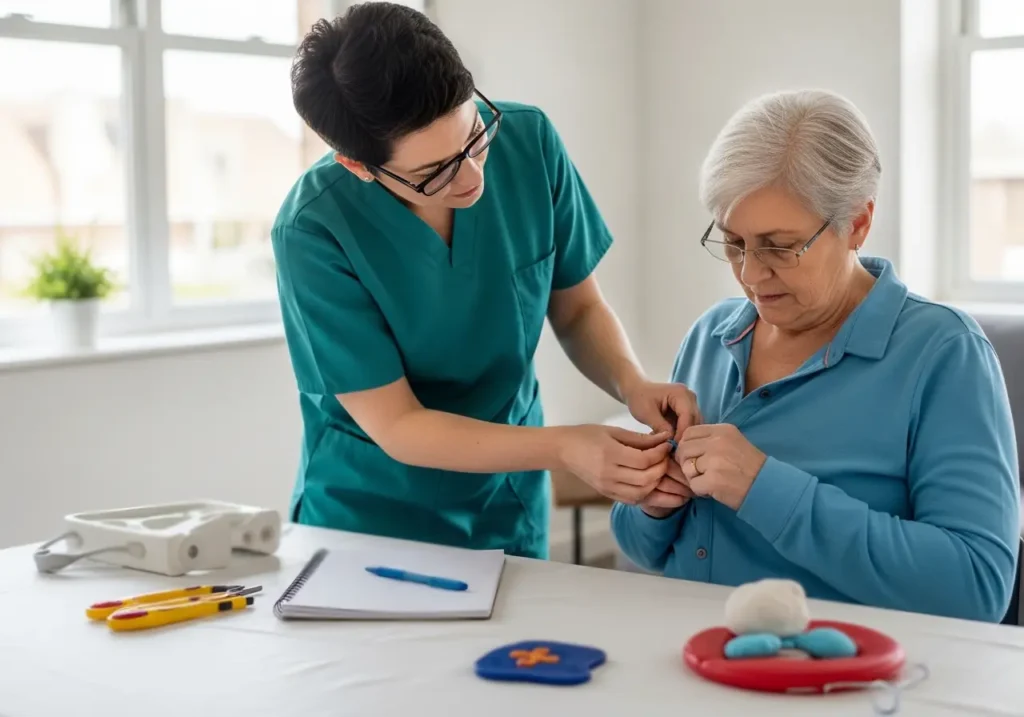
For example, Someone who had a stroke may no longer be able to button a shirt the way they used to. An OT does not just say keep practicing. They might introduce a button hook, teach a new technique, work on fine motor strength, or suggest clothing adaptations. They meet the person where they are.
That is the core of this work. It is not about fixing a body part. It is about helping a person live their life.
Who Actually Needs Occupational Therapy?
I have had families ask me this many times. They think OT is only for people with serious disabilities or major medical events. But the range is much wider than that.
Occupational therapy can help:
- Seniors who are losing independence and need support staying in their home safely
- Adults recovering from a stroke, surgery, brain injury, or accident
- Children who are behind in motor skills, sensory processing, or learning readiness
- People managing chronic conditions like arthritis, multiple sclerosis, or Parkinson’s disease
- Individuals dealing with mental health challenges that affect daily functioning
- Teenagers and young adults navigating school, social skills, or independence
The common thread is this. Something in daily life has become difficult. Maybe it was always difficult. Maybe it became difficult after a health event. Either way, occupational therapy can help.
Occupational Therapy for Adults
Adult life comes with a lot of demands. Work, caregiving, household management, social obligations. When something disrupts your ability to handle those demands, it is not just inconvenient. It can feel like losing a part of yourself.
Adult occupational therapy services are designed around that reality. They help adults rebuild skills and confidence after injury, illness, or a change in health.
After a stroke, for instance, a person might struggle with memory, coordination, or emotional regulation. An OT helps them work through those challenges one step at a time. They practice real tasks in real environments. Not just stretches on a table.
For someone living with a condition like arthritis, therapy focuses on joint protection, energy conservation, and finding smarter ways to do daily tasks without increasing pain. For someone recovering from hand surgery, it is about regaining the grip strength and precision needed to write, cook, or get dressed again.
Occupational therapy services for adults are not about doing everything for the person. They are about helping the person do things for themselves. That distinction matters a lot.
Occupational Therapy for Children
Children learn by doing. And when something gets in the way of doing, it affects everything. Learning, social connection, confidence, and even behavior.
Occupational therapy services for children address the full range of developmental challenges. A child who struggles to hold a pencil, tie shoelaces, or sit still during meals is not simply being difficult. There is often a sensory, motor, or coordination reason behind it.
Early intervention makes a significant difference. Early childhood occupational therapy services for children born to five can address feeding difficulties, delayed motor skills, sensory sensitivities, and trouble with basic self care. The earlier these challenges are caught and worked on, the better the outcomes tend to be.
For school age children, therapy often focuses on handwriting, classroom participation, attention, and social skills. Occupational therapy services for middle school kids expand into independence skills, emotional regulation, and preparing for more complex academic and social environments.
Parents sometimes tell me they feel guilty for seeking help. But getting your child support early is one of the most proactive things you can do. It is not about labeling your child. It is about giving them tools they will use for the rest of their lives.
Occupational Therapy for Seniors
Getting older does not mean giving up independence. But it often means needing some support to maintain it.
Occupational therapy for seniors focuses on three big areas. Independence, safety, and routine. Therapists work with older adults to help them manage daily tasks like bathing, dressing, preparing meals, and managing medications. They also assess the home environment for fall risks and recommend modifications that can genuinely prevent accidents.
Sometimes the smallest improvements make the biggest difference. Adding grab bars. Reorganizing a kitchen so frequently used items are within easy reach. Teaching an energy saving technique for someone with heart failure. These things sound simple, but they change lives.
For seniors with dementia or cognitive decline, occupational therapists also work on creating structured routines, simplifying daily tasks, and helping family caregivers understand how to support their loved one effectively. It is care that extends beyond the individual.
The Different Ways Occupational Therapy Can Be Delivered
One thing people do not always realize is that occupational therapy does not have to happen in a clinic. There are several different ways to access it, depending on your situation.
In Home Therapy
In home occupational therapy services bring the therapist directly to you. This is especially valuable for people who cannot easily travel, seniors who want to stay in their own homes, or children who do better in a familiar environment. It also allows the therapist to see exactly how a person functions in their actual living space, which makes assessments and recommendations far more practical.
Clinic Based Therapy
Clinic settings offer access to specialized equipment, more structured environments, and often more intensive sessions. Many people recovering from surgery, injury, or neurological conditions start with clinic based therapy and transition to home sessions as they improve.
Online and Teletherapy
Online occupational therapy services are a newer but growing option. Teletherapy can work well for consultations, parent coaching, school related goals, and ongoing support when in person visits are not possible. Access to teletherapy pediatric occupational therapy services for kids in Chicago and other major cities has expanded significantly, making quality care more reachable.
How Occupational Therapy Fits Into Home Health Care
When someone is recovering from a hospital stay or managing a serious chronic condition at home, they often need more than just one type of support. That is where home health care comes in.
Home health care in Chicago Illinois and across the state connects patients with a coordinated team. That team often includes nurses, physical therapists, occupational therapists, and home health aides all working together toward the same goal. Getting the person stable, independent, and comfortable at home.
An occupational therapist on a home health team might focus on safe bathing techniques after hip surgery. Or on helping someone with Parkinson’s disease learn adaptive strategies for eating and dressing. Or on training a family caregiver in how to assist without creating dependence.
Many people looking for home health care services in Chicago or the best home health care services in Illinois are specifically looking for this kind of well rounded, coordinated approach. Not just someone to check vitals, but a full team invested in quality of life.
Occupational therapy is a central part of that picture. When it is included in a home care plan, outcomes tend to be better. People regain independence faster, feel more confident, and are less likely to end up back in the hospital.
School Settings and Pediatric Support
Many children receive occupational therapy through their school, often as part of a special education or support plan. School based therapists work alongside teachers to help children access the curriculum, manage sensory challenges in the classroom, and develop the fine motor and organizational skills needed for school success.
Occupational therapy services for kids in school settings look different from clinic based therapy. They are embedded in the child’s natural environment. The therapist might work with a student during handwriting practice, coach them through a sensory break, or consult with a teacher on classroom accommodations.
For families who need more specialized or frequent support than the school provides, private or community based options exist. Teletherapy has made pediatric occupational therapy services more accessible for kids in Chicago and surrounding areas, especially where wait lists for in person services can be long.
What a Therapy Session Actually Looks Like
People often imagine therapy sessions as very formal or clinical. In occupational therapy, that is rarely the case. Especially with children, sessions often look a lot like play.
A session might start with a conversation about how the week went. What was hard? What felt easier? Then the therapist moves into activities that address specific goals. But those activities are chosen carefully to feel relevant and even enjoyable.
A child working on hand strength might play with putty, build with Legos, or work through a craft project. A senior learning safe transfers might practice getting in and out of a chair with guidance. An adult relearning cooking tasks after a brain injury might walk through a simple recipe step by step, with the therapist observing and problem solving alongside them.
Progress in occupational therapy is gradual. It is not linear. Some days feel like breakthroughs, and some days feel like setbacks. But over time, with consistency, most people see real changes in how they function in daily life.
The therapist is not doing the work for the person. They are guiding, coaching, and gradually stepping back as the person builds confidence and skill.
How to Find Occupational Therapy Services Near You
If you think you or a family member could benefit from occupational therapy, the first step is usually a referral from your primary care doctor or a specialist. That referral can open the door to coverage through Medicare, Medicaid, or private insurance.
For children, schools can initiate evaluations. You can also request a private evaluation if you feel the school process is moving too slowly.
For adults or seniors who need care at home, home health care agencies in Chicago and throughout Illinois can connect you with occupational therapists who come directly to you. Many agencies offer a full team so you can get physical therapy, nursing, and OT all coordinated through one provider.
Home health care in Chicago Illinois is available through Medicare certified agencies for those who qualify, which generally means being homebound and having a skilled care need. Qualifying for home health care often opens access to occupational therapy as part of the plan of care.
If you are in the Chicago suburbs, areas like Oak Lawn have multiple providers offering in-home and clinic based adult occupational therapy services. Looking for a reputable home health care agency in your area and asking specifically about their OT services is a good starting point.
Questions I Hear Often
Is occupational therapy the same as physical therapy?
They are related but different. Physical therapy focuses primarily on movement, strength, pain, and physical function. Occupational therapy focuses on how a person performs daily activities and what barriers exist to doing them. In home health care, both are often part of the same plan and work in close coordination.
How long does occupational therapy take?
It depends on the person and the goal. Some people see meaningful improvement in a few weeks. Others work with a therapist over several months, especially after a significant health event. There is no fixed timeline. Progress is reassessed regularly.
Can occupational therapy really be done at home?
Absolutely. In many cases, home is actually the best place for it. It allows the therapist to assess and work within the person’s real environment rather than a simulated one. In-home occupational therapy services are widely available through home health agencies and can be covered by insurance.
Is OT only for children?
Not at all. While occupational therapy is well known in pediatric settings, the majority of OT work is done with adults and seniors. Anyone facing challenges with daily life tasks can potentially benefit.
Will insurance cover it?
Medicare, Medicaid, and most private insurance plans cover occupational therapy when it is medically necessary and ordered by a physician. Coverage details vary, so it is worth checking with your provider before starting services.
What if my child is too young?
There is no minimum age. Early childhood occupational therapy services for children birth to five are specifically designed for very young children. In fact, starting earlier is generally better. The brain is most adaptable in early years, and early support can prevent smaller challenges from growing into bigger ones.
A Note Before You Go
Occupational therapy is not about making someone perform to a standard. It is about helping a real person live their real life with a little more ease, confidence, and independence.
Whether it is a toddler learning to hold a spoon, a teenager figuring out how to manage school demands, an adult recovering from a health setback, or a senior trying to stay safely in their home. Occupational therapy is about the daily moments that matter.
Sometimes the smallest improvements make the biggest difference. A better grip. A safer bathroom. A child who can finally write their name. These things may sound ordinary. But to the person living them, they can mean everything.
If you are wondering whether occupational therapy might help someone you care about, the answer is usually: it is worth finding out. Reach out to a home health care agency, ask your doctor for a referral, or contact a local therapy provider. Help is available, and it can genuinely change daily life. Read more