

If you’re reading this at 11 pm after finally getting your parent settled for the night, you already know what caregiver exhaustion feels like, and you don’t need us to describe it back to you. According to AARP’s most recent national caregiving data, more than 51 million Americans, nearly one in five adults, are providing care to someone age 50 or older, and the average caregiver now spends 26 hours a week doing it on top of everything else in their life. Respite care for family caregivers exists specifically for this moment: a way to step away for a few hours, a few days, or occasionally longer, without leaving your loved one unattended or unsafe.
This guide walks through what respite care actually looks like in practice: in-home help, adult day programs, and short-term facility stays, and then gets into the part most articles skip entirely: who actually pays for it, including the specific Medicare, VA, and Illinois programs that can help cover the cost. If you’ve searched this because you’re genuinely running on empty, the goal here is a real answer, not a reminder that self-care matters.
What Respite Care Actually Is
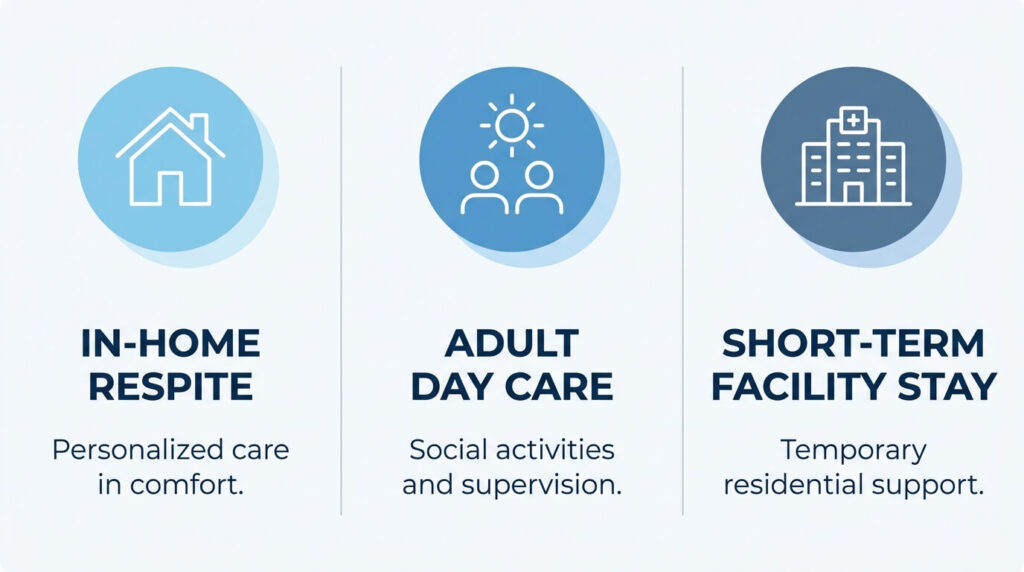
According to the National Institute on Aging, respite care is short-term relief for primary caregivers, giving them time to rest, travel, or spend time with other family and friends, and it can last anywhere from a few hours to several weeks depending on the situation. It comes in three main forms:

- Home-based respite, where a paid caregiver or home health aide comes into your loved one’s own home so you can step out
- Adult day care centers, community-based daytime programs where your loved one is looked after, socially engaged, and often fed, while you’re at work or simply taking a break
- Short-term facility stays, where your loved one stays temporarily in a hospital or skilled nursing facility, typically used for longer breaks or when a caregiver is dealing with their own medical need
None of these are a permanent placement. The entire point of respite care is that your loved one returns to their normal living situation once the break is over; it’s a bridge, not a transition.
Why Taking a Break Isn’t Optional, It’s Part of the Care Plan
It’s worth saying plainly: needing a break doesn’t mean you’re failing at caregiving; it means you’re doing a genuinely demanding job. AARP’s 2025 caregiving research found that caregivers have, on average, been providing care for five years, up from under four years in 2020, and that 44 percent now provide high-intensity care, up from 39 percent five years earlier. Caregivers supporting someone with a memory issue or dementia report even higher rates of negative financial, health, and emotional impact than caregivers overall.
Caregiver burnout doesn’t just hurt the caregiver; it eventually affects the quality of care being provided too. A caregiver running on no sleep and no breaks for months at a time is more likely to make a medication mistake, lose patience during a difficult moment, or reach a breaking point that forces a sudden, unplanned decision about long-term care. Respite care, used regularly rather than only in a crisis, is one of the most effective ways to prevent that outcome.
In-Home Respite Care
This is usually the least disruptive option, since your loved one stays in their own familiar environment and nothing about their routine changes except who’s in the room. A trained home health aide can come in for a few hours a week, an occasional weekend, or a longer stretch, handling meals, personal care, light supervision, and companionship while you step away. It works well for families who want minimal disruption and for loved ones who do poorly with unfamiliar environments, which is common with dementia and advanced age. You can see what our own home health aide services actually include, since the day-to-day tasks matter more than the job title when you’re deciding if this fits your situation.
The tradeoff is that in-home respite generally needs to be scheduled in advance rather than arranged same-day, and depending on how you’re paying for it, there may be a minimum number of hours per visit.
Adult Day Care Centers
Adult day care centers are a strong option for caregivers who need regular, predictable daytime breaks, most often because they’re working or managing their own health needs during the day. Your loved one spends the day at a supervised facility with structured activities, meals, and social interaction, then returns home in the evening. This tends to work best for people who are still fairly mobile and social, and less well for someone who needs a fully quiet, low-stimulation environment or has significant late-stage dementia.
National cost estimates for adult day care and other respite formats vary widely by market, and by how much medical supervision is included, so we’re intentionally not quoting a specific dollar figure here without a confirmed Illinois-specific source. If you’re weighing adult day care against other options financially, it’s worth calling a few local centers directly for current rates rather than relying on a national average that may not reflect the Chicago-area market.
Short-Term Facility Stays
For longer breaks, a recovery period after your own surgery, a family trip, or simply a stretch where daily caregiving isn’t possible, a short-term stay in a skilled nursing or assisted living facility can provide respite for days or weeks at a time. This is the least common of the three formats for routine, planned breaks, but it’s the one most directly tied to Medicare coverage, specifically for families managing hospice care, which we cover in the next section.
Who Pays for Respite Care?
This is the question most articles on this topic skip past, and it’s usually the one that actually determines whether a family can use respite care at all. Here’s how the major coverage paths compare:
| Program | What It Covers | Who Qualifies |
| Medicare Hospice Respite Benefit | Up to 5 consecutive days of inpatient respite care in a Medicare-approved hospital or skilled nursing facility, at 5% coinsurance | Patients already enrolled in Medicare hospice care, and their caregivers |
| VA Respite Care | A minimum of 30 days of respite per calendar year, delivered in-home, at an adult day health center, or as a short facility stay | Enrolled veterans who meet a clinical need for the service, with copays possibly applying based on disability rating |
| Illinois Caregiver Support Program | Funding toward respite care, along with caregiver counseling, training, and support groups | Family caregivers of adults, accessed through local Area Agencies on Aging and Caregiver Resource Centers |
| Private Pay | Any respite format, on your own schedule, without an eligibility determination | Anyone who can pay out of pocket |

According to Medicare’s official hospice benefits guide, Medicare covers up to five days of inpatient respite care each time it’s needed for a patient already receiving hospice care, with the family paying 5 percent of the Medicare-approved amount, for example, $5 a day if Medicare’s approved rate is $100 a day. This benefit is specifically for hospice situations, so it won’t apply to routine, non-hospice caregiving breaks.
For veterans, the VA’s respite care program guarantees at least 30 days of respite per year for enrolled veterans who meet the clinical need, delivered through a paid home health aide visit, an adult day health center, or a short stay at a VA Community Living Center. Veterans whose family caregiver is enrolled in the VA’s Program of Comprehensive Assistance for Family Caregivers, which requires a combined service-connected disability rating of 70 percent or higher, have this respite benefit built directly into that program. If your family is also navigating VA Aid and Attendance or other payment questions, our guide to paying for home health care without Medicare covers VA benefits and Illinois Medicaid programs in more depth.
Illinois Resources for Family Caregivers
Illinois administers its version of the federal National Family Caregiver Support Program, funded under the Older Americans Act, through the Illinois Caregiver Support Program. According to the Illinois Department on Aging, this program is delivered in partnership with local Area Agencies on Aging and community service providers, and it funds five categories of support: information about available services, help accessing those services, individual counseling and support groups, respite care, and limited supplemental services. It’s open to family members and other informal caregivers providing in-home or community care to an older adult, as well as grandparents and relative caregivers raising children under 18.
To find respite care through this program, the state directs caregivers to their local Caregiver Resource Center, and Illinois also maintains the Senior HelpLine at 1-800-252-8966 as a starting point if you’re not sure which local agency covers your area. The Illinois Respite Coalition also operates as a statewide search tool for finding respite providers by location and type of care needed.
How to Choose the Right Type of Respite Care for Your Situation
There’s no single right answer here; it depends on your loved one’s needs and what kind of break you actually need. This breakdown may help:
| Your Situation | Best Fit |
| Need a few hours a week to run errands or rest | In-home respite, a few hours per visit |
| Working during the day and need regular daytime coverage | Adult day care center |
| Loved one has advanced dementia and does poorly with new environments | In-home respite, to minimize disruption |
| Need a week or more off for travel, surgery, or a family emergency | Short-term facility stay, or extended in-home coverage |
| Loved one is already in hospice care | Medicare’s 5-day inpatient hospice respite benefit |
| You’re a veteran’s family caregiver | VA respite benefit, up to 30 days a year |
When Respite Care Isn’t Enough
Sometimes what looks like a need for occasional respite is actually a sign that your loved one’s care needs have outgrown what part-time breaks can address. If you find yourself needing respite care every single week just to keep up, or if your loved one’s condition has changed enough that leaving them even briefly feels genuinely unsafe, that’s worth a bigger conversation about ongoing in-home care or a different living situation altogether. Our guide to aging in place vs. assisted living walks through how to think about that decision, including the Illinois programs that can help pay for either path.
Frequently Asked Questions
What is respite care for family caregivers?
Respite care is short-term relief for a primary caregiver, delivered in the home, at an adult day care center, or through a brief facility stay, so the caregiver can rest, travel, or handle other responsibilities while their loved one is safely cared for.
Does Medicare pay for respite care?
Medicare covers up to five consecutive days of inpatient respite care, but only for caregivers of a patient already enrolled in Medicare hospice care, at 5 percent coinsurance. It does not cover routine, non-hospice respite care.
Does the VA offer respite care for veterans?
Yes. Enrolled veterans who meet the clinical need for the service are guaranteed a minimum of 30 days of respite care per calendar year, available in-home, at a VA adult day health center, or as a short stay at a VA facility.
What is the Illinois Caregiver Support Program?
It’s Illinois’s implementation of the federal National Family Caregiver Support Program, funding respite care, counseling, training, and support groups for family caregivers, delivered through local Area Agencies on Aging and Caregiver Resource Centers.
How much does respite care cost in Illinois?
Costs vary by format and provider; in-home respite, adult day care, and short-term facility stays are priced differently, and rates vary by location. It’s worth calling local providers directly for current pricing rather than relying on a national estimate.
How often should a family caregiver use respite care?
There’s no fixed rule, but using it regularly, even a few hours a week, tends to prevent burnout more effectively than waiting until you’re at a breaking point to use it for the first time.
Can respite care be used for a family member with dementia?
Yes, and in-home respite is often the better fit for someone with dementia, since staying in a familiar environment tends to cause less disruption and confusion than a new setting.
Where do I find respite care providers near me in Illinois?
Start with your local Area Agency on Aging or the Illinois Senior HelpLine at 1-800-252-8966, or search the Illinois Respite Coalition’s statewide provider directory.
The Bottom Line
Needing a break from caregiving isn’t a sign that something’s wrong with you; it’s a predictable part of a genuinely demanding role, and there are real programs built specifically to help. Between in-home respite, adult day care, Medicare’s hospice benefit, VA respite care, and Illinois’s own Caregiver Support Program, most families have at least one workable path to actual relief, even if it takes a phone call or two to find the right fit.
If you’d rather talk through your specific situation than research every option from scratch, call Choice Care Home Health at (708) 489-0123. We’re a Medicare-certified, ACHC-accredited home health agency serving Orland Park and the surrounding Cook, DuPage, and Will County area. While we can’t approve a VA or state benefit application, we can help you understand what in-home support might look like for your family and where to go for the rest.