
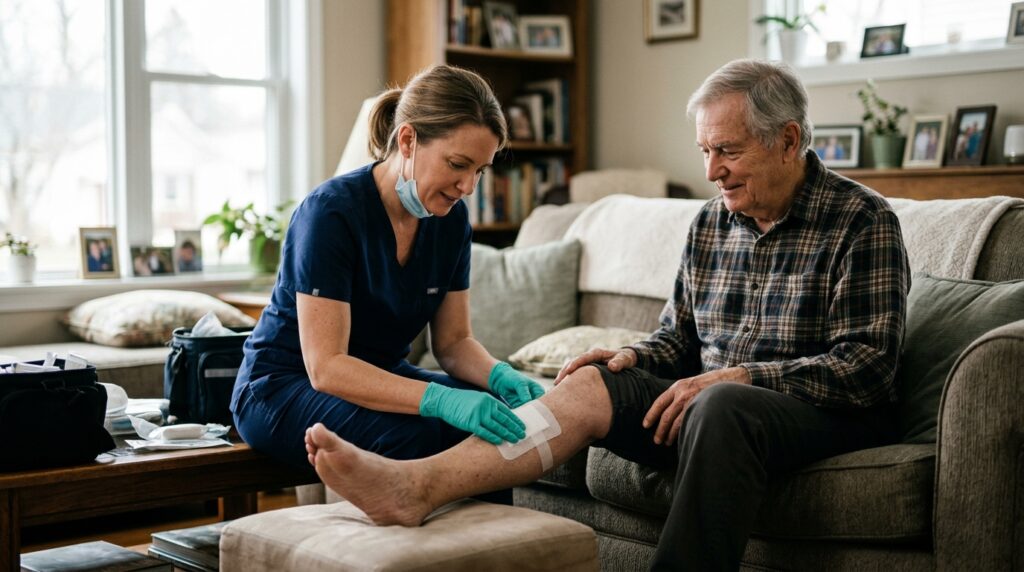
Your mom came home from the hospital in Palos Heights with a surgical incision, a bag of gauze, and instructions that made sense in the room but not at her kitchen table. Now it is day two, the dressing looks damp, and you are standing there wondering if you are helping her heal or making things worse.
Take a breath. Wound care at home means keeping a wound clean, covered, and monitored so it heals safely, usually with a skilled nurse guiding the dressing changes and teaching the family what to watch for. Done right, it lowers the risk of infection and helps people across Chicago and the southwest suburbs recover at home instead of back in a hospital bed.
Key Takeaways
- Wound care at home keeps a wound clean, covered, and watched so it heals without infection.
- Wash your hands, change dressings as directed, and keep the wound dry between changes.
- Watch for infection signs: spreading redness, warmth, swelling, bad odor, pus, or fever.
- A skilled nurse can handle complex, surgical, diabetic, or pressure wounds and teach your family the routine.
- For eligible patients, Medicare often covers home health wound care at no out-of-pocket cost.
What is wound care at home?
Wound care at home is the day-to-day work of cleaning a wound, changing its dressing, and checking how it heals, all done in the home rather than a clinic. For simple wounds, a family can manage it with guidance. For surgical incisions, diabetic foot ulcers (open sores on the feet common in diabetes), or pressure ulcers (bedsores from staying in one position too long), a licensed nurse usually leads the care.
The goal is always the same: protect the wound, prevent infection, and support healing.
How do you change a wound dressing at home safely?
A clean, steady routine matters more than speed. Here is the basic process a nurse will teach you. Always follow the specific instructions from your own care team first.
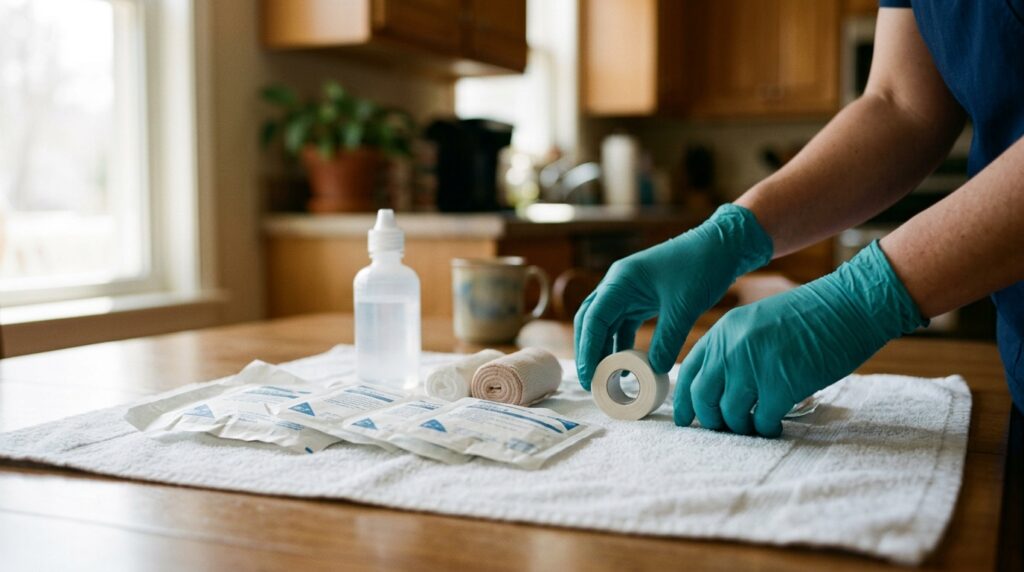
- Wash your hands well with soap and water for at least 20 seconds, then put on clean gloves.
- Set up a clean space. Lay fresh supplies on a clean towel within reach before you start.
- Remove the old dressing gently. Loosen the edges and lift it away slowly. If it sticks, moisten it as directed rather than pulling.
- Look at the wound. Note the color, any drainage, and the smell before you clean it.
- Clean as instructed, usually with saline or plain water, wiping gently from the center outward.
- Apply the new dressing and any ointment exactly as ordered, keeping the sterile side untouched.
- Remove gloves, wash your hands again, and write down what you saw so the nurse can track healing.
Not comfortable doing this alone? You should not have to be. A skilled nurse from Choice Care can take over the dressing changes and coach your family until it feels manageable. Call (708) 489-0123 to set up in-home wound care in Chicago or the nearby suburbs.
When should you call a nurse or doctor?
Most healing is slow and steady. What you are watching for is any sign the wound is going the wrong way. Use this quick reference.
| Warning sign | What it may mean | What to do |
| Spreading redness or red streaks | Possible infection | Call the nurse today |
| Increasing warmth or swelling | Inflammation or infection | Call the nurse |
| Thick or foul smelling drainage, or pus | Infection | Call the nurse promptly |
| Fever or chills | Infection may be spreading | Call the doctor; if severe, seek urgent care |
| Wound getting larger or not improving in 1 to 2 weeks | Delayed healing | Ask for a wound assessment |
| Sudden heavy bleeding or a wound that splits open | Emergency | Call 911 |
This table is educational and does not replace your care team’s instructions.
Who needs skilled wound care at home?
Some wounds are simply too complex or too risky for family-only care. Skilled home health wound care is often the right call for:
- Surgical incisions that need sterile technique, staple or suture removal, or close monitoring after a hospital stay. Our guide on recovering at home after surgery covers what that transition looks like.
- Diabetic foot ulcers, which heal slowly and can worsen fast without expert eyes.
- Pressure ulcers (bedsores) in people with limited mobility.
- Chronic or non-healing wounds that need advanced dressings or wound vacuum therapy.
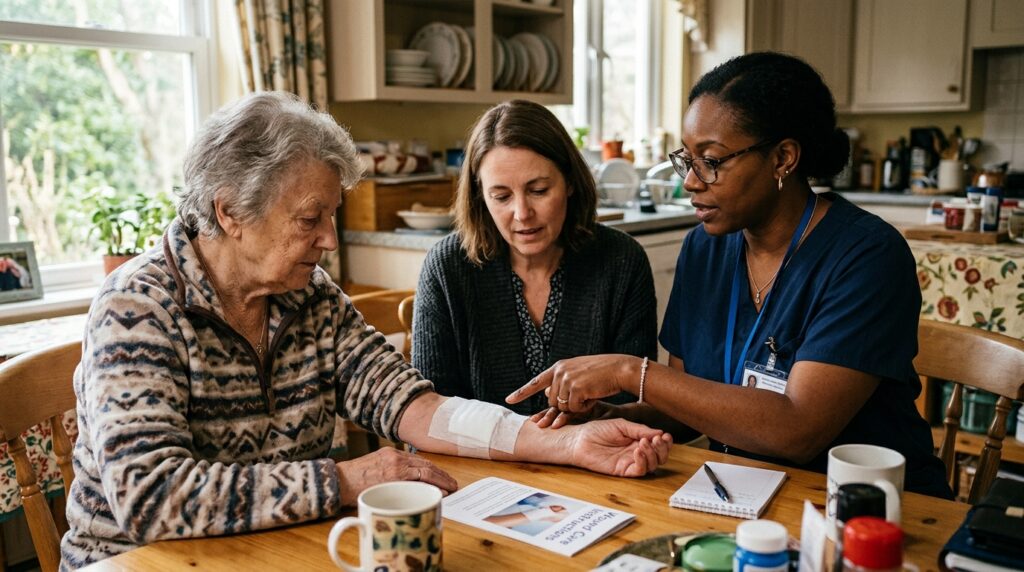
Skilled nurses assess the wound at each visit, manage advanced dressings, coordinate with the physician and any wound clinic, and teach families the wound care basics: good nutrition, clean technique, and infection control. A home health aide can also help with the daily activities that support healing, like bathing and repositioning.
Healing also depends on the whole person, not just the wound. According to the Centers for Disease Control and Prevention, more than 38 million Americans have diabetes, a leading cause of slow-healing wounds and foot ulcers, which is one reason expert monitoring at home matters so much.
What helps a wound heal faster at home?
Wounds heal from the inside out, so the dressing is only half the job. These everyday habits give the body what it needs to close a wound and fight off infection:
- Eat for healing. Protein rebuilds tissue, and vitamins A and C and zinc support repair. Lean meats, eggs, beans, and colorful vegetables all help.
- Stay hydrated. Water keeps skin and tissue healthy and helps circulation carry nutrients to the wound.
- Keep blood sugar in range. For people with diabetes, high blood sugar slows healing and raises infection risk, so steady glucose control is part of wound care.
- Take pressure off the wound. Change positions often and use cushions or special mattresses to prevent and relieve pressure ulcers.
- Do not smoke. Smoking narrows blood vessels and starves a wound of the oxygen it needs to heal.
- Keep moving as allowed. Gentle activity your care team approves improves circulation. If mobility is limited, physical therapy can help rebuild it safely.
A home health nurse builds these habits into the care plan and adjusts them as the wound changes, so healing does not stall.
Does Medicare cover wound care at home?
Often, yes. If a doctor certifies that a patient is homebound (leaving home takes considerable effort) and needs skilled care, Medicare’s home health benefit usually covers wound care at no out-of-pocket cost. You can see how eligibility works in our guide to Medicare home health care in Illinois and our breakdown of what Medicare covers. Many Medicare Advantage and private plans cover it too; see the insurance plans we accept.
One point that reassures families: skilled wound care is medical care ordered by a physician, not the same as nonmedical companion help. That medical piece is what makes it Medicare eligible.
Getting wound care started near Chicago
Choice Care Home Health is a Medicare-certified and ACHC-accredited home health agency serving Chicago and the southwest suburbs, including Palos Heights, Palos Hills, and Orland Park, across Cook, DuPage, and Will Counties. Our skilled nurses handle surgical, diabetic, pressure, and chronic wounds, and coordinate with your physician and local hospitals for a smooth recovery at home.
For discharge planners and case managers: we accept wound care referrals and can coordinate a start-of-care visit quickly to protect a fragile healing window and reduce readmissions. Call (708) 489-0123 or reach us through the contact page.
For families: you do not have to manage a difficult wound alone. Call (708) 489-0123 or explore our full home health services to get started.
This article is educational and is not a substitute for personalized medical advice. Follow the specific instructions from your physician or wound care nurse for your situation.
FAQ Section
How do you care for a wound at home?
Caring for a wound at home means keeping it clean, covered, and monitored. Wash your hands, change the dressing exactly as your care team directs, keep the wound dry between changes, and watch for infection signs like spreading redness or drainage. For surgical, diabetic, or pressure wounds, a skilled home health nurse should guide or perform the dressing changes.
What are the signs of a wound infection?
The main signs of a wound infection are spreading redness or red streaks, increasing warmth and swelling, thick or foul-smelling drainage or pus, and a wound that is not improving. Fever or chills can mean the infection is spreading. Call your nurse or doctor promptly if you notice these, since early treatment prevents serious complications.
Does Medicare cover wound care at home?
Often, yes. If a physician certifies that a patient is homebound and needs skilled care, Medicare’s home health benefit usually covers wound care at no out-of-pocket cost. Many Medicare Advantage and private plans also cover it. Coverage depends on the doctor’s orders and eligibility, so a quick call to a home health agency can confirm your situation.
How often should a wound dressing be changed?
It depends on the wound and the type of dressing, so always follow your care team’s specific orders. Some dressings are changed daily, others every few days, and some advanced dressings stay on longer. Change it sooner if it becomes loose, saturated, or soiled, and call your nurse if you are unsure.
When should I see a nurse or doctor about a wound?
Call promptly if you see spreading redness, increasing warmth or swelling, foul-smelling drainage or pus, a fever, or a wound that grows or does not improve in one to two weeks. Sudden heavy bleeding or a wound that splits open is an emergency; call 911. When in doubt, a wound assessment is always worth the call.
Can family members do wound care, or do you need a nurse?
Families can often manage simple wounds with training, but surgical incisions, diabetic foot ulcers, pressure ulcers, and chronic or non-healing wounds usually need a skilled nurse. A home health nurse can perform the complex changes, use advanced dressings, coordinate with the doctor, and teach the family safe technique so no one feels alone with it.