
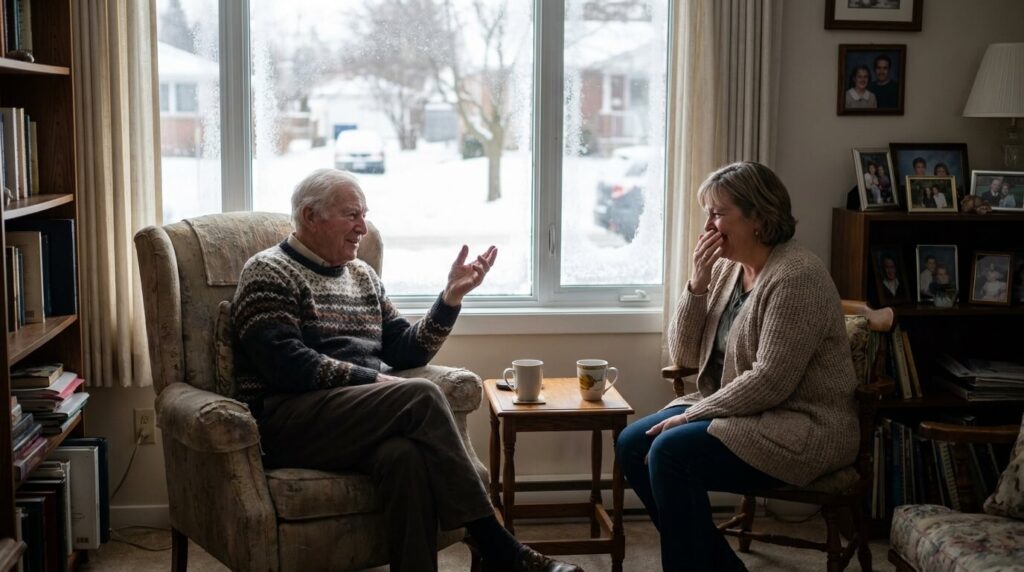
Maybe it’s that your mother stopped calling first. Or your father, who used to sit on the porch every evening even in October, hasn’t left his recliner in a week. Nothing dramatic happened; the change just crept in with the shorter days, and now you’re left wondering if this is ordinary winter sluggishness or something that actually needs attention.
Winter depression in seniors is a real and researched pattern, not just a figure of speech, and it often overlaps with loneliness and social isolation in ways that are genuinely hard to tell apart from a phone call. This guide walks through how to tell the difference, what signs are worth watching for, what actually helps, and when it’s time to involve a doctor or bring in professional support rather than waiting to see if it passes.
Why Winter Can Be Harder for Older Adults
Winter doesn’t cause depression on its own, but it removes several things that normally protect against it, all at once. Shorter daylight hours mean less time outside and less natural light exposure. Icy sidewalks and driveways make a short walk feel like a real risk rather than routine exercise. Family and friends who’d normally stop by are dealing with their own winter schedules, and social invitations naturally slow down. For an older adult who already has some mobility limitations or lives alone, all of this compounds quickly: less light, less movement, less contact, all in the same few months.
None of this means winter automatically causes depression in every older adult. Most people feel the seasonal slowdown and adjust. The concern is when the slowdown doesn’t lift, or when it comes with other changes that go beyond just “staying in more.”
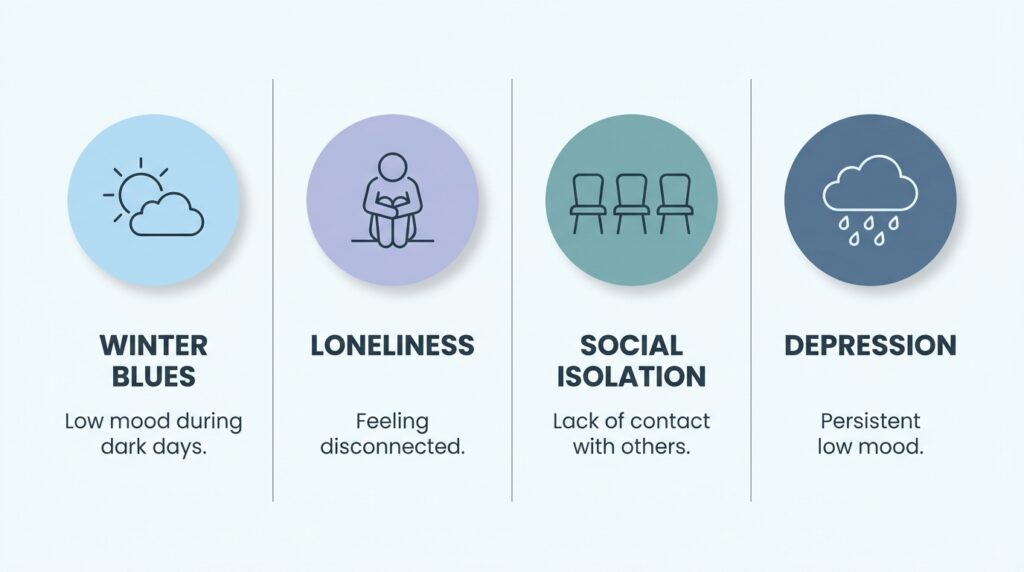
Winter Blues, Loneliness, Social Isolation, or Depression?
These four terms get used almost interchangeably, but they’re genuinely different things, and knowing which one you’re seeing changes what actually helps.
What Are the Winter Blues?
This is the mild, temporary dip in mood and energy that a lot of people feel as days get shorter and colder. It comes and goes, doesn’t stop someone from functioning day to day, and usually lifts on its own or with small lifestyle adjustments.
What Is Loneliness?
According to the National Institute on Aging, loneliness is the distressing feeling of being alone or separated, while social isolation is the lack of social contacts and having few people to interact with regularly. Importantly, these aren’t the same thing: someone can live alone and not feel lonely at all, and someone can feel lonely even while surrounded by people.
What Is Social Isolation?
Social isolation is the actual, measurable absence of regular social contact: fewer visits, fewer calls, fewer reasons to leave the house. A senior can be socially isolated without describing themselves as lonely, which is part of why it’s easy for family to miss from a distance.
What Is Depression?
Depression is a diagnosable medical condition, not just sadness, and according to the National Institute on Aging, it is not a normal part of aging, even though it’s common among older adults. It involves a persistent change in mood, thinking, and daily functioning that lasts for weeks, not days.
What Is Seasonal Affective Disorder?
Seasonal affective disorder (SAD) is a type of depression tied to the change in seasons, with symptoms that typically appear at the same time each year, most often starting in fall and continuing through winter. According to the Mayo Clinic, winter-pattern SAD often includes oversleeping, carbohydrate cravings, weight gain, and low energy, on top of the general symptoms of depression.
Here’s how these four concepts compare side by side:
| Winter Blues | Loneliness | Social Isolation | Depression / SAD | |
| What it is | A mild, temporary mood dip | A distressing feeling of being alone | An actual lack of regular social contact | A persistent medical condition affecting mood and function |
| Typical duration | Days to a couple of weeks, comes and goes | Can be occasional or chronic | Ongoing, tied to circumstances | Two weeks or more, most of the day, nearly every day |
| Does it affect daily function? | Rarely | Sometimes | Sometimes | Usually, yes |
| What usually helps | Light, activity, routine | Social connection, even brief contact | Increasing actual contact and support | Professional evaluation and treatment |
Signs of Depression in Seniors to Watch For
Depression in older adults doesn’t always look like sadness. It’s frequently mistaken for “just getting older” or dismissed as a personality change, which is exactly why family members are often the first to notice something’s wrong, even before the senior themselves would describe it as depression. According to the National Institute on Aging, common signs include:
- Persistent sad, anxious, or “empty” mood
- Feelings of hopelessness, guilt, or worthlessness
- Irritability or restlessness
- Losing interest in activities they used to enjoy
- Noticeably lower energy, or moving and talking more slowly than usual
- Trouble concentrating, remembering things, or making decisions
- Letting important responsibilities slide, bills, appointments, family obligations
- Sleeping much more or much less than usual
- Eating more or less than usual, with noticeable weight change
- Increased alcohol use or other high-risk behavior
If several of these signs show up together and last more than two weeks, that’s the point where the National Institute on Aging recommends talking with a doctor rather than waiting it out.
It’s also important to say plainly: depression is a serious condition, and if left untreated, it can lead to thoughts of death or suicide. This isn’t meant to alarm you; it’s meant to make clear that this isn’t a “tough it out” situation. If your parent talks about not wanting to live, feeling like a burden, or having no reason to go on, take it seriously and act on it the same day. Call or text 988 to reach the Suicide & Crisis Lifeline, available 24/7, or call 911 or go to an emergency room if there’s any immediate danger.
Why Seniors May Become More Isolated in Winter
Isolation in winter usually isn’t a choice; it’s the result of several small barriers stacking up at once. The National Institute on Aging names several risk factors for isolation and loneliness that become especially relevant once the weather turns:
- Loss of mobility or fear of falling on ice and snow
- Lack of transportation, especially if they no longer drive in winter conditions
- Living alone, with fewer built-in reasons to leave the house
- Vision or hearing changes that make winter driving or socializing harder
- Separation from family, especially if children or grandchildren live far away
- Loss of a spouse or close friend, which often coincides with a broader loss of routine
- An existing health condition or cognitive change that makes going out feel harder than it used to
None of these causes are anyone’s fault, and most of them are fixable with the right support, which is really the point of the next two sections.
What Helps Seniors With Winter Isolation and Low Mood?
If what you’re seeing looks more like the winter blues or early isolation than clinical depression, there’s a lot a family can do directly, before it ever needs to become a medical conversation.
- Keep a consistent daily routine. Regular wake times, meals, and a predictable schedule give structure that’s easy to lose once outdoor activity drops off.
- Schedule regular contact; don’t leave it to chance. A standing weekly call or visit gets kept in a way that “I’ll check in sometime” usually doesn’t.
- Encourage safe physical activity indoors. Simple stretching, chair exercises, or even walking hallways in a nearby mall keeps movement going without the fall risk of icy sidewalks.
- Keep existing social activities going, even if the format changes. A weekly card game or church group can often move to a covered ride or a video call rather than stopping entirely.
- Make the home brighter and more comfortable. More light during the day, a comfortable place to sit near a window, and a warm, well-lit home all genuinely help mood, not just aesthetics.
- Give them something to look forward to and something to do. A hobby, a small project, or a regular visitor gives structure to days that would otherwise blur together.
- Watch for changes over time, not just how they seem in one conversation. A single good phone call doesn’t rule out a bad week, and a single rough call doesn’t necessarily mean depression; it’s the pattern over several weeks that matters most.
When an Older Parent May Need Professional Help
Some situations call for more than family support alone, and it’s worth being honest about where that line sits rather than hoping things improve on their own.
Professional evaluation is worth pursuing when:
- Symptoms have lasted more than two weeks and aren’t improving
- There’s a real change in daily function, missed medications, unpaid bills, noticeable weight loss
- Your parent is withdrawing from activities or people they used to genuinely enjoy
- There’s any mention of hopelessness, being a burden, or not wanting to be here, which should be treated as urgent, not dismissed as venting
A primary care physician is a reasonable first call for a non-urgent concern, since they can screen for depression and rule out other medical causes, like medication side effects or thyroid issues, that can mimic depression symptoms. For anything urgent, the crisis resources above apply immediately, not after trying other things first.
If you’d like to talk through what you’re noticing before deciding on next steps, call Choice Care Home Health at (708) 489-0123. We can’t diagnose depression over the phone, but our team, including our medical social work staff, can help you think through what you’re seeing and what kind of support might actually fit.
How Home-Based Support Can Help an Isolated Senior
Once it’s clear that more than occasional check-ins are needed, in-home professional support can address both the practical and emotional sides of what’s going on.
Home health aides provide hands-on daily support, help with bathing, dressing, meal preparation, and light housekeeping, which also happens to bring regular, dependable human contact into a home several times a week. For a senior whose isolation is tied partly to mobility limitations, that combination of practical help and companionship often addresses both problems at once. You can see what our home health aide services actually include.
Medical social work is specifically built for the emotional and logistical side of this. Our medical social work services include counseling support, connecting families to community resources, and long-term care planning, exactly the kind of support that fits a situation where isolation and low mood are tangled together with practical challenges like transportation or finances.
Skilled nursing and therapy services matter here too, since physical and emotional health are rarely separate issues in practice. A senior recovering from a fall, managing a chronic condition, or dealing with a recent health change often experiences low mood alongside those physical challenges, and our intermittent skilled nursing team can address both the medical need and the isolation that frequently comes with it. You can see the full range of what we offer on our services page.
If your parent is already managing dementia alongside these changes, our guide on Medicare coverage for in-home dementia care covers that overlap in more depth, since depression and dementia symptoms can look similar and sometimes occur together.
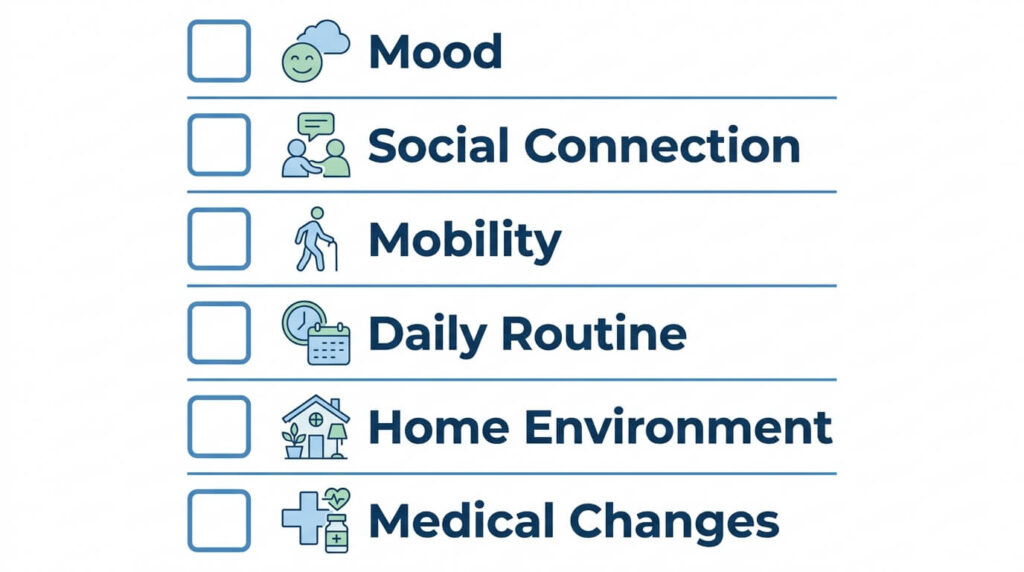
Practical Winter Checklist for Family Caregivers
Use this as a quick monthly check rather than something to obsess over daily:
| Area | What to Monitor |
| Mood | Withdrawal, persistent sadness, loss of interest in usual activities |
| Social connection | Frequency of calls, visitors, and outside activities |
| Mobility | Difficulty getting around safely, avoiding stairs or outdoor walks |
| Daily routine | Meals, sleep patterns, medication adherence, hygiene |
| Home environment | Adequate heat, good lighting, cleared walkways, fall hazards |
| Medical changes | Anything worth mentioning to their doctor at the next visit |
Frequently Asked Questions
Can seniors experience seasonal depression?
Yes. Seasonal affective disorder can affect older adults just as it does younger people, and it often overlaps with existing risk factors like reduced mobility and social isolation, which can make winter-pattern symptoms more pronounced.
What are the first signs of depression in an elderly parent?
Common early signs include a persistent low or irritable mood, losing interest in things they used to enjoy, sleeping or eating noticeably differently, and withdrawing from family or friends. If these last more than two weeks, it’s worth discussing with their doctor.
How can family reduce loneliness in seniors during winter?
Scheduling regular, predictable contact rather than occasional calls, helping them stay involved in existing social activities even if the format has to change, and making sure they have safe transportation options all genuinely help reduce loneliness.
What is the difference between loneliness and depression?
Loneliness is a feeling tied to a lack of connection, and it can come and go depending on circumstances. Depression is a medical condition involving persistent changes in mood, energy, and daily functioning that typically lasts for weeks and often needs professional treatment.
Can home care help an isolated senior?
Yes. A home health aide provides both practical daily support and regular human contact, and medical social work services can address the emotional and logistical sides of isolation directly, including connecting families to community resources.
When should I contact a doctor about my parent’s mood?
When symptoms last more than two weeks, involve a real change in daily functioning, or include any mention of hopelessness or not wanting to be here, the last of which should be treated as urgent rather than something to monitor further.
Can a medical social worker help a senior who is struggling emotionally?
Yes. Medical social workers provide counseling support, help connect families to community resources, and assist with long-term care planning, which often addresses both the emotional and practical sides of winter isolation at the same time.
The Bottom Line
Winter genuinely does make things harder for a lot of older adults: less light, less movement, less contact, and it’s not always obvious from a phone call whether what you’re seeing is a temporary dip or something that needs real attention. Trust what you’re noticing. A parent who’s gone quiet, stopped doing things they used to enjoy, or seems different in a way you can’t quite name is worth a closer look, not a wait-and-see approach.
If you’re trying to figure out what kind of support actually fits your family’s situation, call Choice Care Home Health at (708) 489-0123. We’re a Medicare-certified, ACHC-accredited home health agency serving Orland Park, Palos Heights, Oak Lawn, Tinley Park, and the surrounding Cook, DuPage, and Will County communities, and we can help you think through whether this is something a home health aide, medical social work support, or simply a doctor’s visit can address.