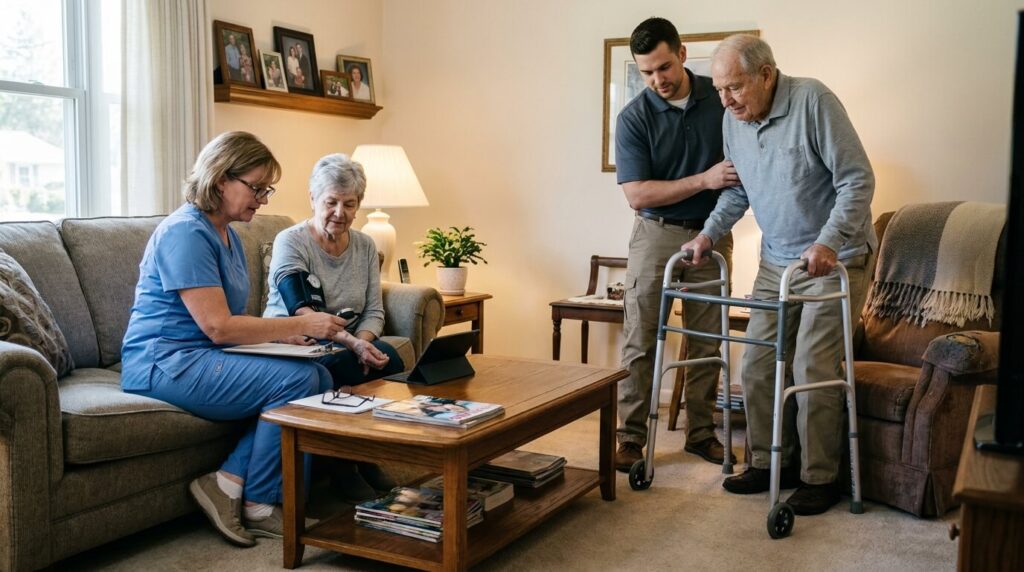
When a parent or loved one comes home after a hospital stay, surgery, stroke, or serious illness, the question is often not whether they need help. The real question is what kind of help they need.
Families may hear terms such as skilled nursing, home health aide, caregiver, home care, and home health care and assume they mean the same thing. They do not.
The simplest difference is this: a skilled nurse provides licensed clinical care that requires professional nursing knowledge, while a home health aide (HHA) primarily supports personal care and activities of daily living as part of an appropriate home health plan.
Understanding skilled nursing vs. home health aide services can help families communicate more clearly with physicians, hospital discharge teams, and home health agencies and understand which combination of services may be appropriate.
Skilled Nursing vs Home Health Aide: Quick Comparison
| Factor | Skilled Nursing | Home Health Aide |
| Main purpose | Clinical and medical care | Personal-care support |
| Typical provider | Registered nurse (RN) or licensed practical nurse (LPN) | Home health aide (HHA) |
| Clinical assessment | Yes | No independent clinical assessment |
| Wound management | May be provided when clinically appropriate | Limited supportive tasks only as permitted |
| Medication-related care | Nursing assessment, education and clinically skilled medication-related services | Limited assistance depending on the care plan and applicable rules |
| Health monitoring | Yes | Observes and reports changes to supervising professionals |
| Bathing and grooming | Not the primary purpose | Common HHA services |
| Dressing assistance | May assist when relevant | Common HHA service |
| Walking assistance | May assess clinical mobility concerns | Can provide appropriate personal assistance |
| Medicare coverage | May be covered when requirements are met | May be covered when the patient is also receiving qualifying skilled services |
Medicare lists medically necessary, part-time or intermittent skilled nursing care and qualifying home health aide care among covered home health services when eligibility conditions are met. Medicare
What Is Skilled Nursing at Home?
Skilled nursing at home is clinical care provided by licensed nursing professionals for medical needs that require nursing knowledge, assessment, judgment, or treatment.
Under Medicare home health guidance, skilled nursing may be provided by an RN or LPN on a part-time or intermittent basis when the care is reasonable and necessary.
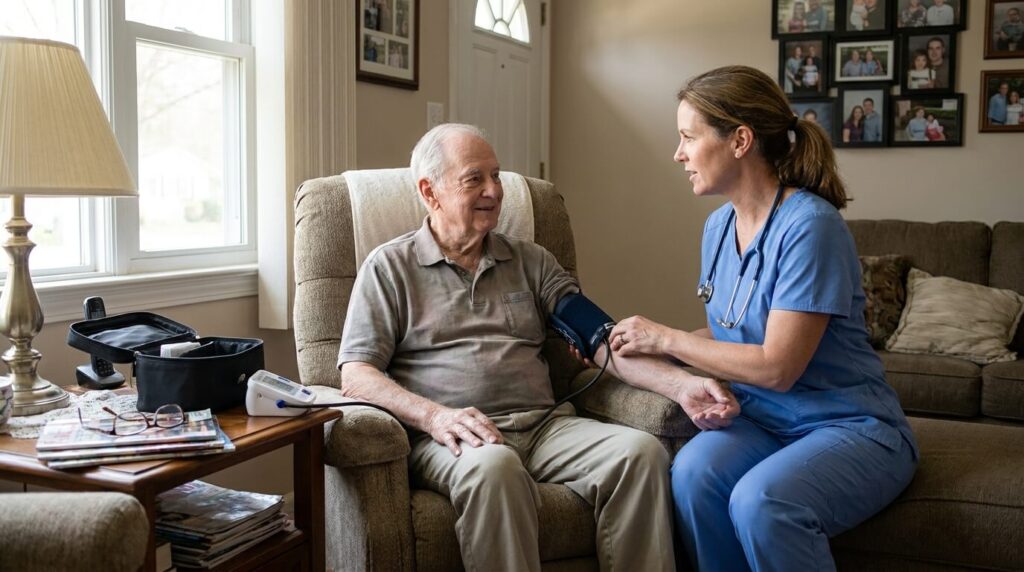
Choice Care provides intermittent skilled nursing at home as part of its home health services.
Common Reasons a Skilled Nurse Visits the Home
A skilled nurse may be involved when a patient needs:
- Clinical assessment after hospitalization or a change in health
- Wound care for surgical wounds or other qualifying wounds
- Certain injections
- Monitoring of a serious or unstable health condition
- Medication education and clinically appropriate medication-related services
- Disease monitoring
- Education for the patient or family caregiver
- Coordination with physicians and other members of the home health care team
Medicare specifically identifies services such as wound care, injections, patient and caregiver education, and monitoring serious illness among examples of medically necessary intermittent skilled nursing. Medicare
Skilled nursing is therefore more than having someone “check in” on the patient. It involves professional clinical judgment.
What Is a Home Health Aide?
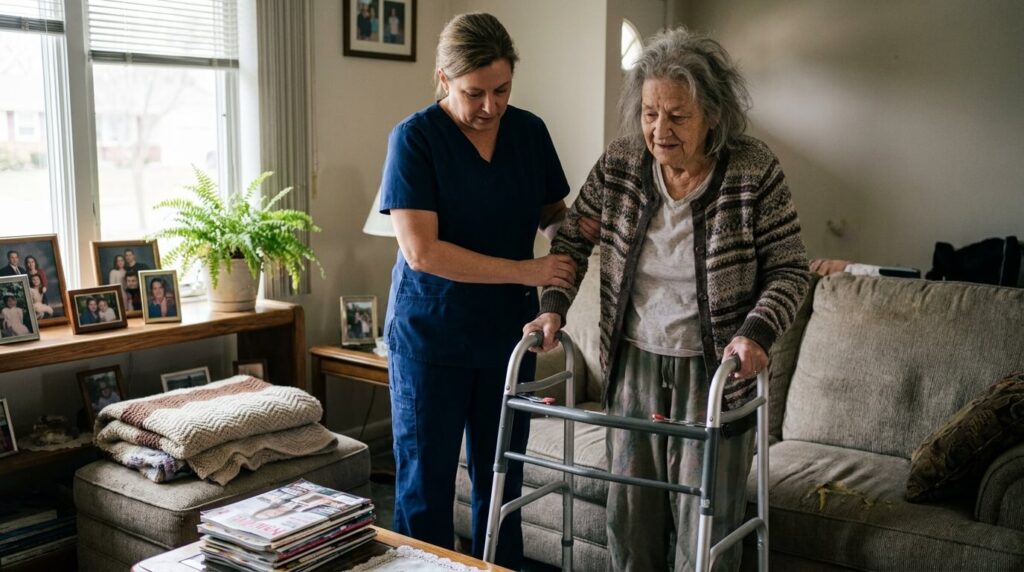
A home health aide focuses largely on personal care and support with everyday activities when those services are included in an appropriate home health plan.
Choice Care’s home health aide services include assistance with daily living needs such as bathing and dressing. The agency’s current HHA page describes its aides as working within a coordinated home health team. Choice Care Home Health
Depending on the patient’s care plan, an HHA may assist with activities such as:
- Bathing
- Grooming
- Dressing
- Walking assistance
- Personal hygiene
- Mobility support
- Feeding or meal-related assistance
- Other appropriate activities of daily living (ADLs)
What an HHA Can and Cannot Do Independently
One of the biggest sources of confusion is the assumption that a home health aide is simply another type of nurse.
An HHA does not independently perform the clinical assessment and skilled medical decision-making that belong to licensed nursing professionals.
At the same time, families should avoid overly broad statements such as “an aide can never help with anything related to medication or dressings.” The exact duties may depend on the plan of care, applicable regulations, supervision, state requirements, and the specific task.
The practical distinction is:
A nurse is responsible for skilled clinical care. An HHA provides authorized personal-care support and related assistance within the care plan.
Key Differences Between Skilled Nursing and Home Health Aide Care
Clinical care vs personal care
Skilled nursing addresses a patient’s clinical needs.
An HHA primarily assists with personal care and everyday functioning.
Professional credentials
Skilled home health nursing is provided by licensed nursing professionals such as an RN or LPN.
A home health aide works in an aide role and does not replace licensed nursing assessment.
Medical assessment
A skilled nurse can assess symptoms, monitor clinical status, identify relevant changes, and communicate those findings to the care team.
An HHA can observe changes and report them but does not independently diagnose or clinically assess the patient.
Treatment responsibilities
Nursing services may include care that requires professional nursing skill, such as certain wound treatments, injections, clinical monitoring, and patient education.
HHA care focuses much more heavily on personal care, mobility assistance, hygiene, and daily activities.
Role in the plan of care
Both services may operate within a coordinated home health plan of care, but they serve different functions.
Medicare coverage rules
Medicare does not treat stand-alone personal care the same as skilled home health services.
A patient may need both
The services are not necessarily alternatives. For some patients, the correct question is not “nurse or aide?” but “does the plan of care appropriately require both?”
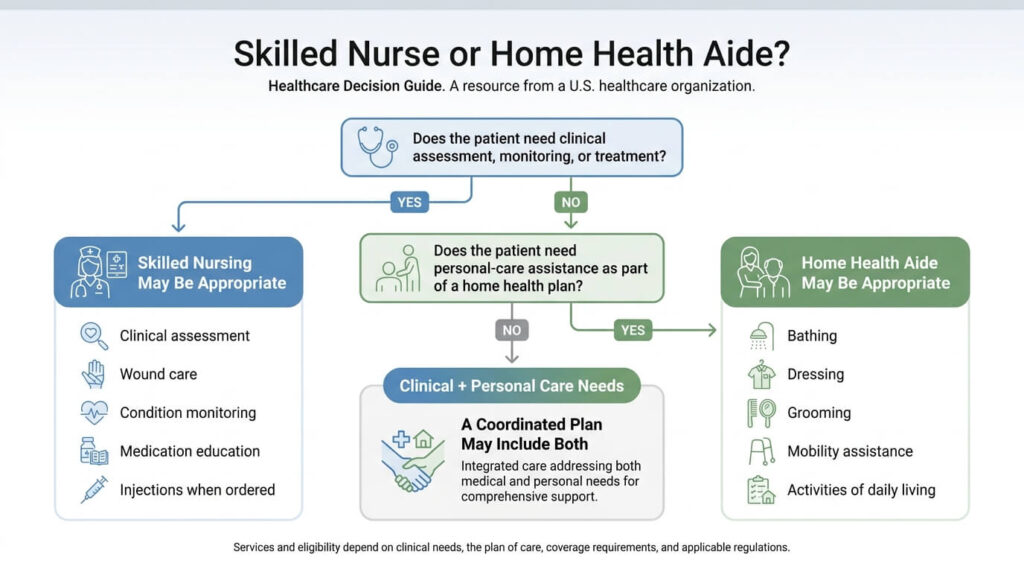
Do You Need a Nurse, a Home Health Aide, or Both?
The answer depends on the patient’s actual needs.
| Situation | Service that may be involved | Why |
| Surgical wound needs skilled assessment and treatment | Skilled nursing | Requires clinical nursing skill |
| Patient needs monitoring after a significant change in condition | Skilled nursing | Requires professional assessment |
| Patient receiving qualifying home health care needs bathing assistance | Home health aide may be included | Personal-care support |
| Stroke recovery includes nursing, therapy and difficulty with ADLs | Multiple disciplines may be involved | Needs can be clinical and functional |
| Patient only needs long-term companionship and housekeeping | May not meet Medicare home health requirements | No qualifying skilled need may be present |
These examples are educational only. Actual eligibility and service decisions depend on the patient’s condition, orders, care plan, coverage, and professional assessment.
After Surgery
Consider someone returning home after joint or abdominal surgery.
A skilled nurse may be ordered to assess the patient, provide appropriate wound care, monitor recovery, or provide education.
If the patient also has difficulty bathing or dressing and meets home health requirements, an HHA may be included to help with appropriate personal-care activities.
Patients transitioning home can also benefit from understanding post-hospital discharge care.
After a Stroke
Stroke recovery often requires several disciplines.
Depending on the patient’s needs, a plan of care could include:
- Skilled nursing
- Physical therapy
- Occupational therapy
- Speech-language pathology
- Home health aide services
The objective is not to assign every patient every service. It is to build a coordinated plan based on clinical and functional needs.
Chronic Conditions
Patients with conditions such as heart failure or diabetes may require skilled assessment, education, monitoring, or other clinician-directed services when medically appropriate.
An HHA does not replace skilled management of these conditions.
Help With Bathing and Dressing Only
This distinction is particularly important for Medicare beneficiaries.
If bathing, dressing, toileting, or other personal-care assistance is the only service a person needs, Medicare generally does not cover that as stand-alone home health care.
Medicare specifically states that custodial or personal care is not covered when it is the only care needed. Medicare
Does Medicare Cover Skilled Nursing and Home Health Aides?
Medicare can cover qualifying home health services, but specific requirements apply.
For Medicare-covered home health care, the beneficiary generally must:
- Be under the care of a doctor or other allowed provider.
- Have home health services ordered and provided under a care plan.
- Need qualifying part-time or intermittent skilled nursing or certain therapy services.
- Meet Medicare’s homebound criteria.
- Receive care from a Medicare-certified home health agency.
Medicare states that qualifying home health aide services may be covered when a person is also receiving skilled nursing, physical therapy, speech-language pathology, or qualifying occupational therapy services from the home health agency. Medicare
Families who want more detail can review Choice Care’s guide on how Medicare covers home health aides and its explanation of who qualifies for home health care.
Important: Coverage should always be verified for the individual patient. A diagnosis, age, or need for personal care alone does not guarantee Medicare coverage.
Can You Receive Skilled Nursing and a Home Health Aide Together?
Yes, when both services are appropriate under the patient’s plan of care and applicable coverage requirements.
For example, a patient recovering from a serious illness might need a nurse for skilled clinical monitoring and an aide for appropriate personal-care assistance.
This is one reason a coordinated home health model matters. Nurses, therapists, aides, medical social workers, physicians, and caregivers may have different roles, but they should be working toward the same patient-specific goals.
Not sure which service may fit your situation? Choice Care’s team can explain its skilled nursing, therapy, and home health aide services and discuss the referral and intake process. Eligibility and coverage still depend on the patient’s individual circumstances.
Skilled Nursing Is Not the Same as a Skilled Nursing Facility
The term “skilled nursing” causes another common misunderstanding.
Skilled nursing at home means qualified nursing services are delivered where the patient lives.
A skilled nursing facility (SNF) is a residential facility where eligible patients receive skilled nursing and rehabilitative services while staying at the facility.
Medicare discusses these as distinct care settings. Home health allows eligible patients to receive certain covered services in their own homes, while SNF care involves admission to a facility. Medicare
How to Start Home Health Care After a Hospital Stay
The process generally looks like this:
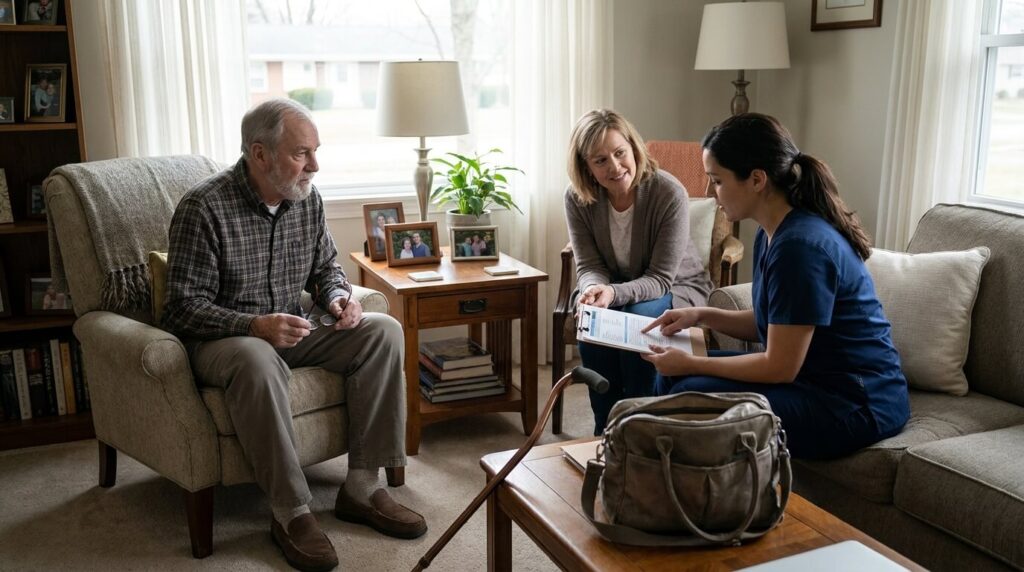
- A physician or allowed practitioner identifies the need for home health care.
- The provider orders appropriate services.
- A Medicare-certified home health agency receives the referral.
- The agency evaluates the patient’s needs.
- The agency coordinates with the ordering provider on the plan of care.
- Appropriate nursing, therapy, aide, or medical social services begin based on that plan.
Medicare notes that a hospital or facility discharge planner may help arrange the transition to home health care after discharge. Medicare
Skilled Nursing and Home Health Aide Services in Orland Park, IL
Choice Care Home Health is based at 15635 S 94th Ave, Orland Park, IL 60462 and states that it is Medicare-certified and ACHC-accredited. The agency provides skilled nursing, therapy, home health aide, and medical social work services. Choice Care Home Health
Families looking for local services can learn more about home health care in Orland Park.
Choice Care also serves communities across the surrounding region, including parts of Cook, DuPage, and Will Counties. Choice Care Home Health
Frequently Asked Questions
Is a home health aide the same as a nurse?
No. A home health aide primarily provides authorized personal-care and daily-living support. A skilled nurse is a licensed professional who provides clinical assessment, treatment, monitoring, and education requiring nursing expertise.
Can someone receive skilled nursing and a home health aide at the same time?
Yes. A patient may receive both when the services are appropriate under the plan of care and coverage requirements. Medicare allows qualifying HHA services when the beneficiary is also receiving eligible skilled nursing or therapy services. Medicare
Does Medicare pay for a home health aide?
Medicare may cover part-time or intermittent HHA care when eligibility requirements are met and the beneficiary is also receiving qualifying skilled home health services. Medicare does not generally cover personal care when that is the only care needed. Medicare
Does Medicare cover skilled nursing at home?
Yes, Medicare may cover medically necessary part-time or intermittent skilled nursing for eligible beneficiaries receiving care from a Medicare-certified home health agency. Medicare
Can a home health aide give medication?
An HHA does not independently perform skilled medication management. The assistance an aide may provide with ordinarily self-administered medications depends on the patient’s plan of care, applicable regulations, supervision, and state rules.
Do I need a doctor’s order for Medicare home health care?
Medicare requires a doctor or other allowed health care provider to evaluate and order qualifying home health services. The care must then be provided through a Medicare-certified home health agency. Medicare
Is skilled nursing at home the same as a nursing home?
No. Skilled nursing at home involves nursing visits in the patient’s residence. A skilled nursing facility provides eligible skilled care while the patient stays at the facility.
Does Medicare cover 24-hour home nursing?
Medicare does not generally pay for 24-hour-a-day care at home. Covered home health nursing is normally part-time or intermittent. Medicare
Choosing the Right Type of Home Health Support
The difference between skilled nursing and a home health aide comes down primarily to the type of care required.
A skilled nurse addresses clinical needs that require licensed nursing expertise. A home health aide supports personal care and activities of daily living within an appropriate care plan.
Some patients need one. Others may benefit from both.
The safest next step is not to guess based on job titles. Discuss the patient’s clinical and functional needs with the treating provider and qualified home health team.
Choice Care Home Health provides intermittent skilled nursing, therapy, home health aide services, and medical social work in Orland Park and surrounding communities. To discuss the referral and intake process, call (708) 489-0123. Choice Care Home Health