

If you’ve started looking for help for an aging parent or a loved one recovering from a hospital stay, you’ve probably run into “home care” and “home health care” used almost interchangeably, sometimes in the same sentence, sometimes on the same web page. They sound similar. They are not the same service; they are not staffed the same way, and they are almost never paid for the same way.
Here’s the short version. Home health care is skilled, physician-ordered medical care such as nursing, physical therapy, occupational therapy, speech-language pathology, and medical social work, delivered under a plan of care and, when your loved one qualifies, largely covered by Medicare. Home care, sometimes called personal care or companion care, is non-medical help with daily living such as bathing, dressing, meals, and companionship, and it’s almost always paid for privately.
This guide walks through what each one actually includes, how Illinois itself defines the two, whether Medicare pays for either, and, most importantly, how to figure out which one your family needs right now. As a Medicare-certified, ACHC-accredited home health agency serving Chicago, Orland Park, Palos Hills, Palos Heights, Tinley Park, Oak Lawn, and the rest of Will County, this is the exact question we help families sort out every week.
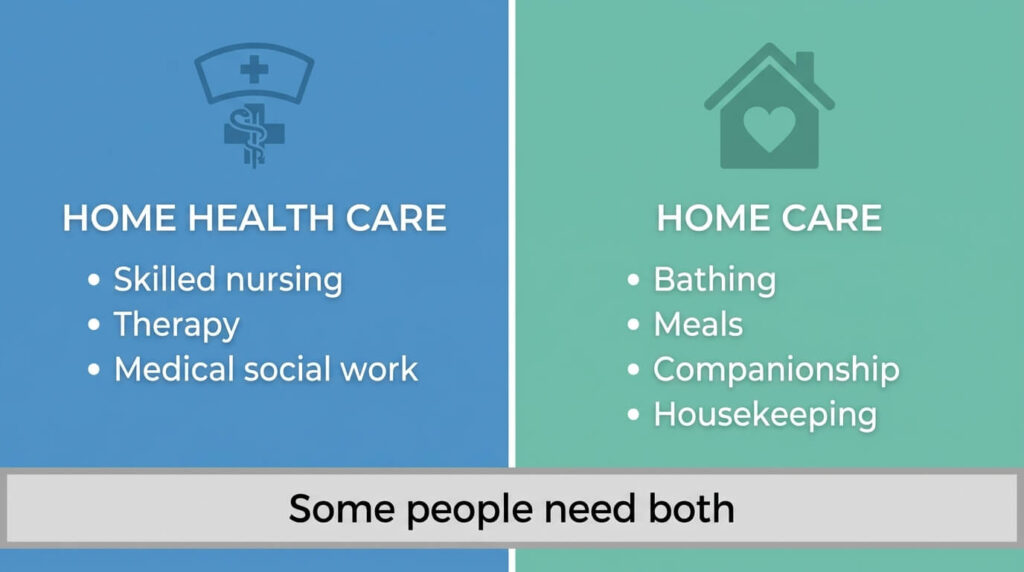
Home Health Care vs. Home Care at a Glance
| Feature | Home Health Care | Home Care |
| Primary purpose | Skilled medical care | Daily-living support |
| Typical providers | Nurses and therapists | Caregivers and aides |
| Physician order required | Generally yes | Generally no |
| Example services | Skilled nursing, physical therapy, occupational therapy, speech therapy | Bathing, dressing, meal prep, companionship |
| Medicare coverage | Covered when eligibility requirements are met | Generally not covered by Medicare |
| Typical duration | Based on skilled medical need, usually shorter term | Can continue indefinitely |
| Best for | Medical recovery or ongoing clinical management | Daily assistance and staying independent at home |
The two aren’t competing options so much as two different tools. Many families end up needing one, the other, or both at different points in the same recovery.
What Is Home Health Care?
Home health care is medical care delivered in the home by licensed clinicians, under a plan of care that a physician or other qualified health care professional prescribes. It exists to treat, monitor, or rehabilitate a specific medical condition, not to provide general daily support. Under Illinois law, a home health agency is defined as an organization that provides skilled nursing services along with at least one other home health service, delivered according to a physician-prescribed treatment plan.
Home health typically includes:
Wound care, medication management, injections, catheter care, and monitoring of chronic conditions like heart failure or diabetes, provided by a registered nurse.
Rebuilding strength, balance, and mobility after surgery, a fall, or a hospital stay, so your loved one can move safely at home.
Occupational Therapy
Relearning the daily tasks that surgery, illness, or a stroke can interrupt, such as dressing, cooking, or bathing safely.
Speech & Language Pathology
Treatment for speech, language, cognitive, or swallowing difficulties, often following a stroke or neurological event.
Help connecting a patient and family to community resources, navigating insurance questions, and planning for the practical side of a serious diagnosis.
Hands-on personal care such as bathing and dressing, but only when it’s part of the same physician-ordered plan of care for a patient already receiving skilled services, not as a standalone service.
What Is Home Care?
Home care, also called personal care, companion care, or custodial care, is non-medical support with the everyday tasks of living at home. It doesn’t require a physician’s order, and it isn’t governed by a clinical plan of care. Illinois defines this category separately: a home services agency provides workers who deliver home services directly in a person’s residence, and the state is explicit that “home services are not medical.”
Home care typically includes:
- Bathing, dressing, and grooming
- Meal preparation
- Light housekeeping and laundry
- Transportation to appointments or errands
- Companionship and supervision
- Respite care, giving a family caregiver a break
Home care can go on for as long as it’s needed. Some families use it for a few months during a recovery. Others use it for years as a loved one’s needs gradually increase.
Home Health Care vs. Home Care: 7 Key Differences
1. Type of Care
Home health is medical. Home care is non-medical, daily-living support.
2. Who Provides the Care
Home health is delivered by licensed nurses, therapists, and social workers. Home care is delivered by caregivers or aides trained in personal care, not clinical treatment.
3. What Services Are Provided
Home health treats a specific condition through a clinical lens: wound care, therapy, monitoring. Home care supports daily function: bathing, meals, housekeeping, companionship.
4. Whether a Physician’s Order Is Required
Home health generally requires a physician to certify the need and prescribe a plan of care. Home care generally does not require a doctor’s order at all.
5. Who Pays
Home health is often covered by Medicare or insurance when eligibility requirements are met. Home care is usually paid for privately, though Medicaid waivers, long-term care insurance, or VA benefits can sometimes help.
6. How Long It Lasts
Home health is tied to a skilled medical need, so it tends to be shorter-term, weeks or a few months, until the condition stabilizes or goals are met. Home care can continue indefinitely, for as long as daily support is needed.
7. The Underlying Goal
Home health aims at medical recovery, rehabilitation, or managing a clinical condition safely at home. Home care aims at independence and quality of life, helping someone stay safely and comfortably in their own home.
Does Medicare Cover Home Health Care?
For most families with Original Medicare, yes, when specific eligibility requirements are met. A physician has to certify that your loved one is homebound, meaning leaving home takes considerable effort or is medically inadvisable, and needs intermittent skilled nursing care, physical therapy, or speech-language pathology on an ongoing basis. Medicare’s own guidelines describe eligibility as needing part-time or intermittent skilled care while homebound, under a physician-certified plan of care.
Once that certification is in place, Medicare-covered home health can include skilled nursing, physical, occupational, and speech-language therapy, medical social services, and home health aide services when they’re part of that same plan of care. There’s no per-visit copayment and no annual deductible for these services under Original Medicare, based on Medicare’s official home health coverage guidelines.
Does Medicare Pay for Home Care?
Generally, no, not for the kind of ongoing, non-medical personal care described above. Medicare is built around skilled, physician-ordered treatment, not standing help with bathing, meals, or companionship on its own. There’s an important nuance here, though: Medicare can cover a home health aide’s help with personal care, but only as part of a covered plan of care alongside skilled nursing or therapy, not as a stand-alone custodial service. If the only thing your loved one needs is daily, non-medical support, that typically falls to private pay, Medicaid waiver programs, long-term care insurance, or VA benefits rather than Medicare itself.
Can You Have Home Care and Home Health Care at the Same Time?
Yes. These aren’t mutually exclusive, and for a lot of families, using both is exactly the right answer. A common example: someone recovering from hip surgery may need physical therapy and skilled nursing through home health for a few weeks, while also needing a caregiver’s help with bathing, meals, or getting to appointments during that same stretch, and often for longer after the skilled care ends. One addresses the medical recovery. The other addresses daily life while that recovery happens.
Which Type of Care Does Your Loved One Need?
Use this as a starting point, then confirm with a professional assessment.
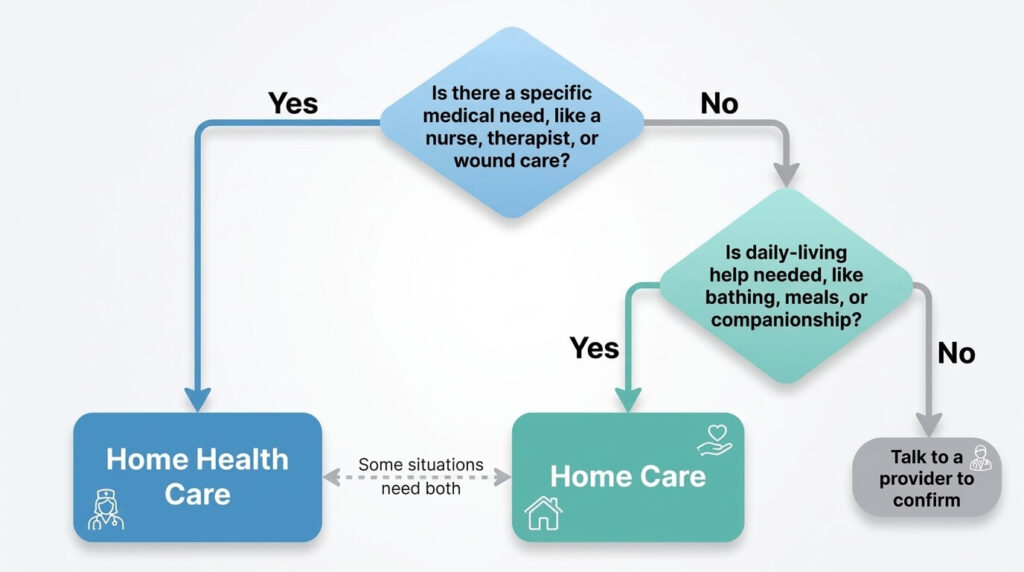
You may need home health care if:
- A doctor has identified a specific medical need
- Skilled nursing or wound care is required
- Physical, occupational, or speech therapy has been recommended
- Your loved one is recovering from surgery, a fall, or a hospital stay
- They meet Medicare’s homebound and skilled-care criteria
You may need home care if:
- Your loved one is medically stable
- They need help with bathing, dressing, or meals
- They need companionship or supervision
- They need help with household tasks or transportation
- The goal is ongoing daily support, not medical treatment
You likely need both if:
- They’re returning home after a hospital stay and aren’t fully independent yet
- They have an ongoing medical need alongside daily living needs
- A family caregiver needs additional support while skilled care is underway
If you’re not sure which category your family falls into, the fastest way to find out is a conversation, not a guess. Call (708) 489-0123 and we’ll walk through your loved one’s situation with you, no obligation.
Home Health Care vs. Home Care in Illinois
Illinois draws this same line at the regulatory level, which is worth knowing if you’re comparing providers. Under state law, a home health agency is an organization licensed to provide skilled nursing along with at least one other home health service, delivered according to a physician-prescribed plan of treatment. A home services agency, by contrast, provides non-medical help with daily living, such as personal care, housekeeping, laundry, and companionship, and the state is explicit that these services “are not medical.”
That distinction matters when you’re choosing a provider. A Medicare-certified home health agency, like Choice Care, has met federal requirements to bill Medicare directly for covered skilled services and typically carries additional accreditation, such as ACHC accreditation, that reflects ongoing quality oversight. A home services agency generally isn’t Medicare-certified in the same way, because what it provides isn’t the kind of skilled care Medicare’s home health benefit covers in the first place. Neither type is “better.” They’re built for different needs, and knowing which license type you’re actually calling helps set the right expectations from the first phone call.
What Questions Should You Ask a Home Care Provider?
Before you commit to any provider, home health or home care, it’s worth asking:
- Are you licensed in Illinois, and as which type of agency?
- Are you Medicare-certified?
- What specific services do you provide?
- Do you offer skilled nursing, physical therapy, or occupational therapy?
- What areas do you serve?
- What insurance or payment options do you accept?
- How is the plan of care developed, and who’s involved?
- What happens during the initial assessment?
- Who supervises the caregivers or clinicians who come to the home?
- What’s the process if my loved one’s needs change?
How Choice Care Home Health Can Help
If what your family needs is on the medical side of that line- skilled nursing, physical therapy, occupational therapy, speech-language pathology, medical social work, or home health aide services tied to a physician’s plan of care- that’s exactly what we provide as a Medicare-certified, ACHC-accredited home health agency. We start with an assessment of your loved one’s specific situation, work with their physician on a plan of care, and coordinate the right mix of services from there. If it turns out you need non-medical home care instead, or in addition, we’re glad to point you in the right direction, because getting your family the right kind of help matters more than which phone number you happened to call first.
Frequently Asked Questions
Is home health care the same as home care?
No. Home health care is skilled, physician-ordered medical care such as nursing and therapy. Home care is non-medical support with daily activities like bathing, meals, and companionship.
What is the biggest difference between home care and home health care?
Whether the service is medical, home health treats a specific condition under a physician’s plan of care. Home care supports daily living and doesn’t require a doctor’s order.
Does Medicare pay for home health care?
Yes, for services that meet Medicare’s requirements: skilled nursing, therapy, or related services ordered by a physician for a home bound patient, under a certified plan of care.
Does Medicare pay for home care?
Generally no, for standalone, non-medical personal care. Medicare can cover a home health aide’s help with personal tasks, but only as part of a covered plan of care alongside skilled nursing or therapy, not as a stand-alone service.
Does home health care require a doctor’s order?
Yes. A physician has to certify the need and prescribe a plan of care before Medicare-covered home health can begin.
What does a home health aide do?
Within a home health plan of care, a home health aide helps with personal care tasks like bathing and dressing, in coordination with the skilled nursing or therapy the patient is already receiving.
Can you receive home care and home health care at the same time?
Yes. It’s common to use both, especially during a recovery, when skilled care addresses the medical need and home care supports daily life alongside it.
Which is better, home care or home health care?
Neither is “better.” They serve different needs. The right choice depends on whether your loved one has a medical need requiring a physician’s plan of care, a daily-living need, or both.
How do I know which service my parent needs?
Start with whether a doctor has identified a specific medical need or ordered therapy or nursing. If yes, home health is likely the right starting point. If the need is mainly daily support like bathing, meals, or companionship, home care fits better. A quick call with a home health provider can help sort out which situation applies.
Does Choice Care provide home health services in Illinois
Yes. Choice Care Home Health is a Medicare-certified, ACHC-accredited home health agency providing skilled nursing, physical therapy, occupational therapy, speech-language pathology, medical social work, and home health aide services to families in Chicago, Orland Park, Palos Hills, Palos Heights, Tinley Park, Oak Lawn, and the rest of Will County.
The Bottom Line
“Home care” and “home health care” get used as if they’re the same thing, but the difference between them is exactly the difference between medical treatment and daily support, and it’s usually the difference between what Medicare will pay for and what your family will pay for privately. If your loved one has a specific medical need, a recent hospital stay, or a doctor recommending therapy or nursing, start with a home health conversation. If the need is mainly help with everyday living, home care is the better fit. And if you’re genuinely not sure which one applies, that’s a completely normal place to be, and a quick call can sort it out faster than another hour of searching.
If you’d rather just ask than guess, call Choice Care Home Health at (708) 489-0123. We’re a Medicare-certified, ACHC-accredited agency serving Chicago, Orland Park, Palos Hills, Palos Heights, Tinley Park, Oak Lawn, and Will County, and we’ll help you figure out which type of care actually fits your family’s situation.