Your mother finished her third round of chemo two days ago. She’s sitting at the kitchen table in Orland Park, staring at a plate of food she can’t make herself eat, and you’re due back at work in an hour. You love her. You also can’t be in two places at once, and you’re starting to wonder who can help her get through the days when the oncology team isn’t the one in the room.
Home health care for cancer patients brings skilled nursing, therapy, personal care, and emotional support directly into the home during the days and weeks between treatments, when patients are often too fatigued, weak, or symptomatic to manage everything alone. In the Chicago area, including Palos Heights, Palos Hills, and Orland Park, Medicare-certified agencies can typically start care within a few days of a doctor’s order.
You’re not the only family dealing with this. According to the National Cancer Institute’s Office of Cancer Survivorship, an estimated 18.6 million people were living as cancer survivors in the United States as of May 2025, about 5.4% of the population. Most of them have had a day like the one your family is having right now.
In plain terms: Home health care for cancer patients is short term, doctor ordered medical and personal support delivered at home between treatment cycles, covering everything from wound care and symptom monitoring to bathing help and emotional counseling.
Key Takeaways
- Home health care fills the gap between oncology visits, when fatigue, nausea, and weakness make daily tasks hard.
- Services can include skilled nursing, physical, occupational, and speech therapy, home health aide support, and medical social work.
- Medicare and many private insurance plans cover home health care when a physician certifies it’s medically necessary.
- Care is different from hospice. It supports patients who are still actively receiving cancer treatment.
- In Cook, DuPage, and Will Counties, care can often begin within a few days of a referral or hospital discharge.
What Home Health Care Looks Like Between Cancer Treatments
Cancer treatment doesn’t end when a patient leaves the infusion chair or the radiation suite. The days after are often the hardest part, and that’s exactly when home health care steps in.
The American Cancer Society describes home care services as help for patients to “cope with an illness or injury, recover from cancer treatment, become stronger and more independent, and better manage side effects from treatment.” That’s the practical goal behind every visit, whether it’s a nurse, a therapist, or an aide walking through the door.
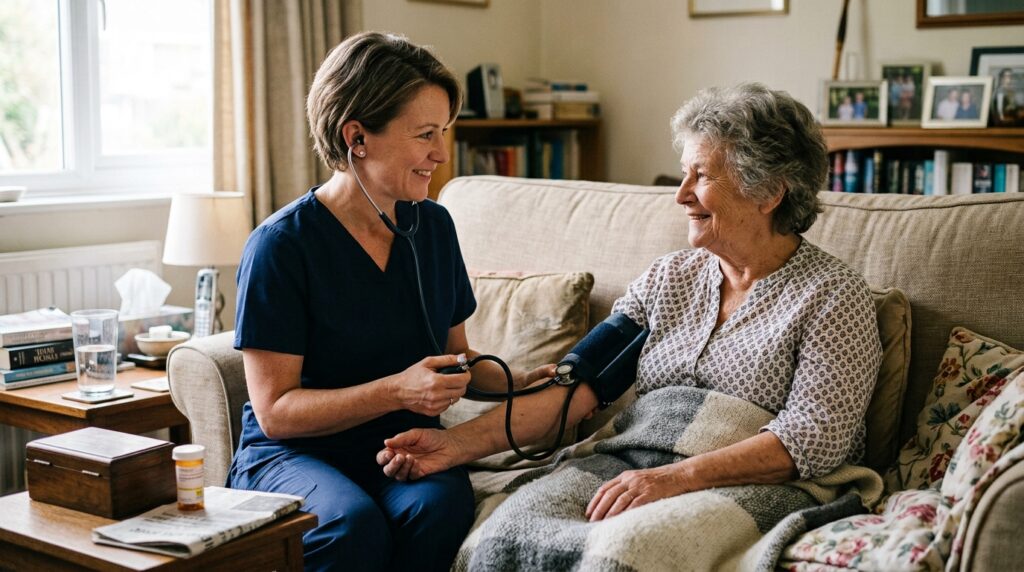
A typical plan of care might include a nurse checking vital signs and a surgical port site twice a week, an occupational therapist helping with energy conservation techniques, and a home health aide (a trained caregiver who assists with bathing, dressing, and light housekeeping, but doesn’t perform medical tasks) stopping by on the days a patient feels weakest.
None of this replaces the oncology team. It supports what the oncologist has already prescribed, and it gives a family a set of trained eyes checking in between appointments, which matters most during the week after a treatment, when problems like dehydration or infection tend to show up.
Who Qualifies for Home Health Care During Cancer Treatment?
To qualify for Medicare-covered home health care, a patient generally needs three things: a physician’s order, a condition that makes leaving home difficult without significant effort (called being “homebound”), and a need for skilled care, such as nursing or therapy, at least part time.
Cancer patients often meet this bar without realizing it. Severe fatigue after chemo, an open surgical wound, or difficulty walking after a hospital stay can all qualify as homebound status. If you’re unsure whether your loved one meets the criteria, our page on who qualifies for home health care walks through it in plain language, and our team can also do a quick eligibility check over the phone.
What Services Help Most Between Chemo or Radiation Cycles?
Every patient’s needs look different, but a few services come up again and again for people moving through cancer treatment.
Skilled nursing. A registered nurse can manage medications, care for a wound or IV/port site, monitor for signs of infection, and communicate directly with the oncology team about anything concerning. Learn more about our skilled nursing care at home.
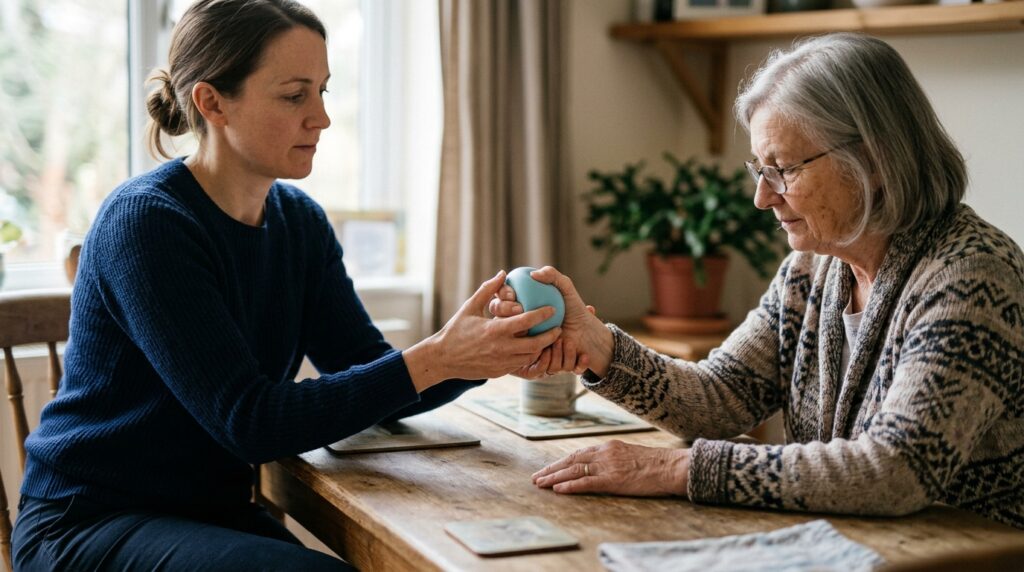
Physical and occupational therapy. Cancer and its treatment can cause muscle loss, balance problems, and nerve damage. Therapists rebuild strength and safety gradually, at the patient’s pace, in the same home where they’ll be recovering.
Speech and language pathology. Head, neck, and esophageal cancers, along with some treatments, can affect swallowing and speech. A speech-language pathologist can address both.
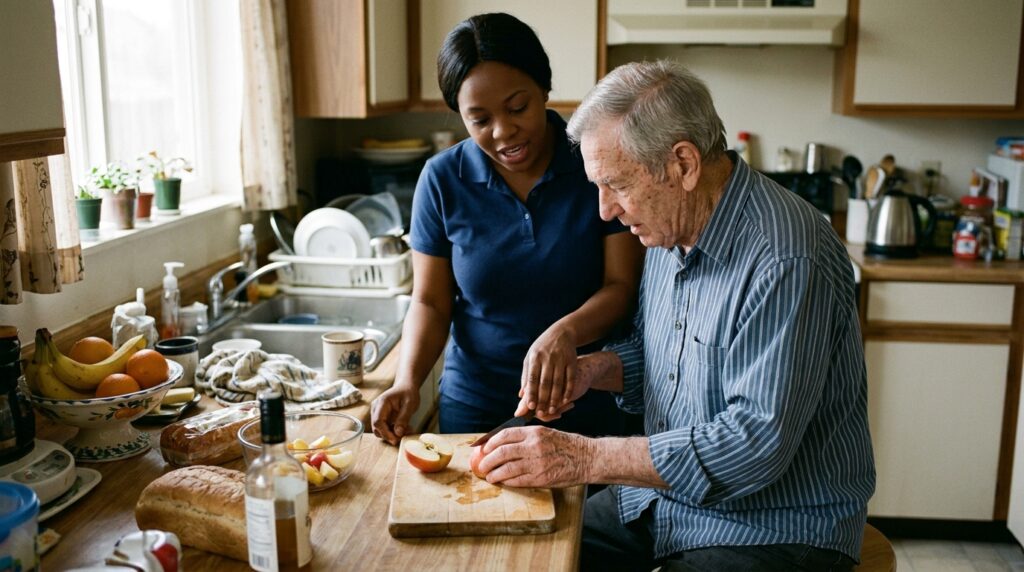
Home health aide services. Bathing, dressing, grooming, and light meal prep become genuinely hard on low-energy days. A home health aide provides that hands-on help safely.
Medical social work. Cancer affects more than the body. A medical social worker helps patients and families process the emotional weight of treatment, connects them to community resources, and helps with practical planning, like coordinating transportation or applying for assistance programs.
Managing Chemotherapy Side Effects at Home
Most of the hard days happen at home, not in the clinic. Here’s how a home health team typically approaches the most common side effects.
Report back to the physician. The home health nurse keeps the oncology team informed, so care stays coordinated instead of siloed.
Assess first. A nurse checks weight, hydration, temperature, and how the patient has been eating and sleeping since the last visit.
Address the most urgent symptom. That might mean adjusting a medication schedule, treating nausea, or checking a wound that looks irritated.
Build a plan for the days between visits. This includes what to watch for, when to call the agency, and when to call the oncologist directly or go to the ER.
Loop in therapy or social work as needed. If fatigue is limiting mobility, PT gets involved. If the family is overwhelmed, social work steps in.
None of this replaces the oncology team. It supports what the oncologist has already prescribed, and it gives a family a set of trained eyes checking in between appointments, which matters most during the week after a treatment, when problems like dehydration or infection tend to show up.
Who Qualifies for Home Health Care During Cancer Treatment?
To qualify for Medicare-covered home health care, a patient generally needs three things: a physician’s order, a condition that makes leaving home difficult without significant effort (called being “homebound”), and a need for skilled care, such as nursing or therapy, at least part time.
Cancer patients often meet this bar without realizing it. Severe fatigue after chemo, an open surgical wound, or difficulty walking after a hospital stay can all qualify as homebound status. If you’re unsure whether your loved one meets the criteria, our page on who qualifies for home health care walks through it in plain language, and our team can also do a quick eligibility check over the phone.
What Services Help Most Between Chemo or Radiation Cycles?
Every patient’s needs look different, but a few services come up again and again for people moving through cancer treatment.
Skilled nursing. A registered nurse can manage medications, care for a wound or IV/port site, monitor for signs of infection, and communicate directly with the oncology team about anything concerning. Learn more about our skilled nursing care at home.
Physical and occupational therapy. Cancer and its treatment can cause muscle loss, balance problems, and nerve damage. Therapists rebuild strength and safety gradually, at the patient’s pace, in the same home where they’ll be recovering.
Speech and language pathology. Head, neck, and esophageal cancers, along with some treatments, can affect swallowing and speech. A speech-language pathologist can address both.
Home health aide services. Bathing, dressing, grooming, and light meal prep become genuinely hard on low-energy days. A home health aide provides that hands-on help safely.
Medical social work. Cancer affects more than the body. A medical social worker helps patients and families process the emotional weight of treatment, connects them to community resources, and helps with practical planning, like coordinating transportation or applying for assistance programs.
Managing Chemotherapy Side Effects at Home
Most of the hard days happen at home, not in the clinic. Here’s how a home health team typically approaches the most common side effects.
- Assess first. A nurse checks weight, hydration, temperature, and how the patient has been eating and sleeping since the last visit.
- Address the most urgent symptom. That might mean adjusting a medication schedule, treating nausea, or checking a wound that looks irritated.
- Build a plan for the days between visits. This includes what to watch for, when to call the agency, and when to call the oncologist directly or go to the ER.
- Loop in therapy or social work as needed. If fatigue is limiting mobility, PT gets involved. If the family is overwhelmed, social work steps in.
- Report back to the physician. The home health nurse keeps the oncology team informed, so care stays coordinated instead of siloed.
Common Between-Treatment Challenges and How Home Health Care Helps
| Challenge | What It Often Looks Like | How Home Health Care Helps |
| Fatigue and weakness | Trouble with stairs, bathing, or standing at the stove | Home health aide for personal care; PT/OT to rebuild strength safely |
| Nausea and appetite loss | Skipping meals, risk of dehydration | Nursing monitors weight and hydration; social work connects families to nutrition resources |
| Neuropathy (nerve damage causing numbness or tingling in the hands and feet) | Dropping items, unsteady walking, fall risk | OT teaches adaptive strategies; PT works on balance and gait |
| Chemo brain (short-term memory and concentration changes linked to treatment) | Forgetting medication doses or appointments | Nursing manages medications and provides reminders and monitoring |
| Emotional strain or caregiver burnout | Family exhausted, patient feels isolated | Medical social workers offer counseling and connect families to respite options |
| Wound or port site care | Post-surgical incision or infusion site needs monitoring | Skilled nursing handles wound care and watches for infection |
Medical Care vs. Non-Medical Care: What’s the Difference?
Families often ask whether they need “a nurse” or “someone to help around the house.” Usually, the honest answer is both, and that’s exactly what a home health agency is built to coordinate.
Medical care covers anything that requires a license: nursing, physical therapy, occupational therapy, speech therapy, and medical social work. Non-medical care covers personal support: bathing, dressing, meal prep, and companionship, typically provided by a home health aide.
A physician’s order and plan of care determine which services your loved one qualifies for, and Choice Care Home Health can help sort out that mix during an initial evaluation.
How Much Does Home Health Care Cost, and Will Insurance Cover It?
This is usually the first question families ask, and it’s a fair one.
Medicare Part A and Part B typically cover home health care in full when a physician certifies it’s medically necessary and the patient meets homebound criteria. There’s generally no copay for covered home health visits under Original Medicare. Many Medicare Advantage plans and private insurance policies also cover home health services, though the details vary by plan.
Our insurance plans page lists what we currently accept, and our page on Medicare coverage for home health care in Illinois breaks down the specifics further. If you’re not sure what your loved one’s plan covers, we can check for you before care ever starts.
Need help sorting out coverage for a loved one going through cancer treatment? Call Choice Care Home Health at (708) 489-0123. We’re Medicare certified and ACHC accredited, and we can usually tell you what’s covered within the same phone call.
How Fast Can Care Start After a Cancer Diagnosis or Treatment?
Once we receive a physician’s order, we can typically schedule an initial evaluation within a day or two, sometimes sooner for patients coming straight from a hospital stay or a difficult treatment cycle. That evaluation is what shapes the plan of care your loved one’s team will follow.
If your family is coming straight from a discharge at a Chicago area hospital and needs something to start almost immediately, tell our intake team that when you call. We coordinate closely with hospital case managers to avoid gaps in care.
Home Health Care Across Chicago’s Southwest Suburbs
Choice Care Home Health serves patients throughout Chicago and the southwest suburbs, including Palos Heights, Palos Hills, and Orland Park, across Cook, DuPage, and Will Counties. That local footprint matters more than it might seem.
A patient discharged from a hospital in the city still needs someone who can reach their home in Orland Park reliably, including during a rough Chicago winter when driving to a follow-up appointment isn’t realistic for someone recovering from chemo. Our team already knows the area, the local hospitals, and the discharge planners who coordinate this kind of care every week.
For Discharge Planners and Case Managers
If you’re a discharge planner, oncology nurse navigator, or case manager coordinating post-treatment care for a patient in Cook, DuPage, or Will County, Choice Care Home Health can typically accept referrals and begin the intake process the same day. We’re Medicare certified and ACHC accredited, and our intake team is used to working directly with hospital and clinic staff to keep the transition smooth for the patient and their family.
Call our office at (708) 489-0123 to reach our referral line, or send a referral through our contact page.
Getting Started
If you’ve read this far, you’re probably the person in your family who’s been holding things together, and you’re wondering whether it’s reasonable to ask for help. It is.
Choice Care Home Health is Medicare certified and ACHC accredited, and we’ve built our full range of home health services specifically for families managing serious illness at home, including cancer. Call us at (708) 489-0123, and we’ll walk you through what care could look like for your loved one, what it costs, and how soon it can start. You can also learn more about our team before you call.
FAQ Section
Does Medicare cover home health care for cancer patients?
Yes, in most cases. Medicare Part A and Part B typically cover home health care when a physician certifies it’s medically necessary and the patient is homebound. This usually includes skilled nursing, therapy, and home health aide visits ordered as part of the plan of care, generally with no copay under Original Medicare. Coverage details can vary, so it’s worth confirming with your specific plan.
Can a home health aide help during chemotherapy?
Yes. A home health aide can assist with bathing, dressing, grooming, and light meal preparation on days when fatigue or nausea makes those tasks difficult. Aides don’t perform medical tasks like medication management or wound care, but they provide the hands-on support that keeps a patient safe and comfortable between nursing visits.
How do I get a home health referral after a cancer diagnosis?
Ask your oncologist, surgeon, or hospital discharge planner for a home health referral, or call an agency directly. Most agencies, including Choice Care Home Health, can contact the physician’s office on your behalf to obtain the order and begin an initial evaluation within a day or two.
What’s the difference between home health care and hospice for cancer patients?
Home health care supports patients who are still actively receiving cancer treatment and working toward recovery or stability. Hospice is for patients who have stopped curative treatment and are focused on comfort near the end of life. The two serve different stages and goals of care.
How soon can home health care start after a hospital discharge?
Once a physician’s order is in place, care can often start within a day or two, and sometimes sooner for patients coming directly from a hospital stay. Agencies that coordinate closely with hospital case managers, like Choice Care Home Health, can usually move faster to avoid a gap in care.
Will a nurse manage my loved one’s pain medication at home?
Yes. A registered nurse can review the medication schedule, monitor for side effects, and communicate any concerns back to the oncology team. This is especially helpful for patients juggling multiple medications for pain, nausea, or other treatment side effects
Is home health care only for medical needs, or can it help with daily tasks too?
Both. A home health plan of care often combines medical services, like nursing and therapy, with personal care support from a home health aide, plus medical social work for emotional and practical support. The mix depends on what the physician orders and what the patient actually needs