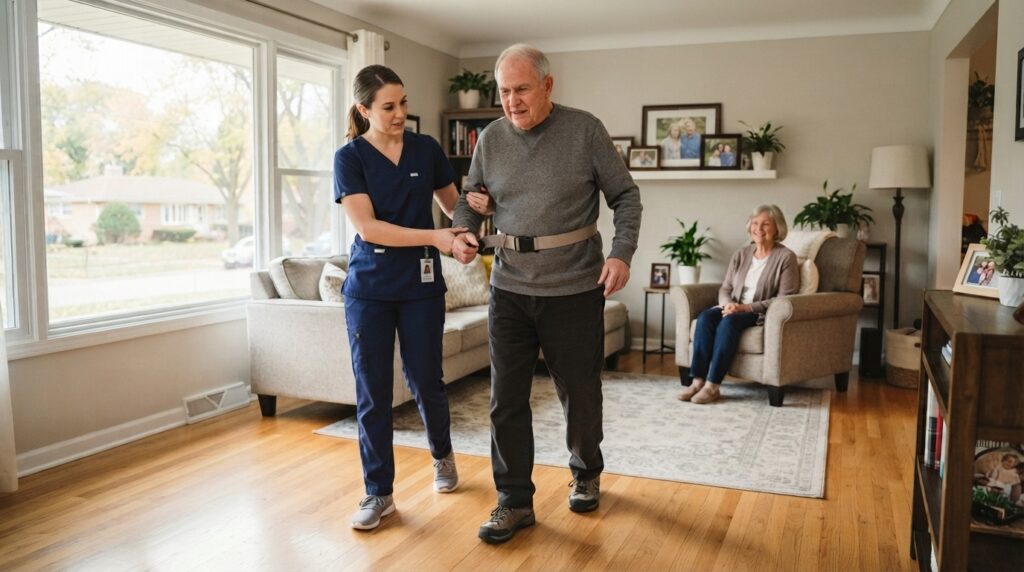
When a hospital or rehab team says your loved one can go home after a stroke, the next question is usually, “Who helps us there?” Home health care after a stroke brings skilled nursing and therapy to the home, so recovery can continue in a familiar place. It is ordered by a doctor and built around the person’s needs. Choice Care Home Health is ACHC-accredited and serves families in Orland Park, Chicago and nearby suburbs.
A stroke is a medical emergency. Use B.E. F.A.S.T., the warning-sign test from the CDC and the American Stroke Association:
- B, Balance: sudden loss of balance, dizziness or trouble walking
- E, Eyes: sudden trouble seeing
- F, Face: one side of the face droops when the person smiles
- A, Arms: one arm drifts down or feels weak when both are raised
- S, Speech: slurred or strange speech, or trouble understanding
- T, Time: call 911 right away
Other sudden signs include confusion, numbness or weakness on one side of the body, and a severe headache with no known cause. Call 911 even if the symptoms go away, and do not drive yourself or the person to the hospital. Note the time the first symptoms started and tell the emergency team.
Key Takeaways
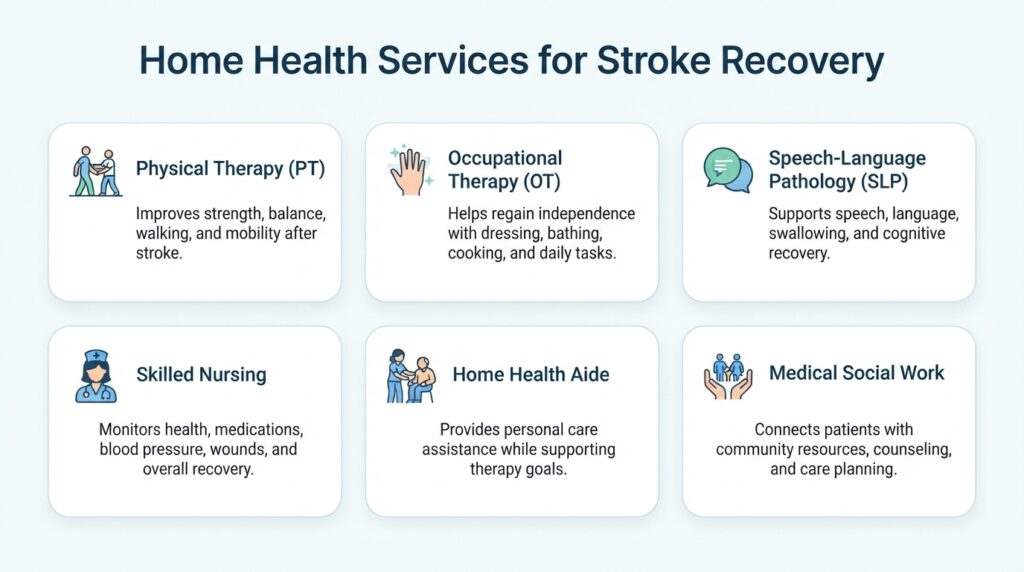
- Home health after a stroke can include skilled nursing, physical therapy, occupational therapy, speech-language pathology, medical social work and, when skilled care is also provided, home health aide visits.
- A doctor orders the care and approves a plan of care. The team updates the plan as the person recovers.
- Medicare can cover home health if you are homebound, need part-time or intermittent skilled care, and use a Medicare-certified agency. Eligibility is decided case by case.
- Care often begins within a few days of discharge, depending on the doctor’s orders and the agency’s schedule.
- A TIA (mini-stroke) is a warning stroke. Call 911 first. Whether home health applies depends on the doctor’s orders.
How Does Home Health Care After a Stroke Work?
- Referral. The hospital or rehab team, or your doctor, sends a referral to a home health agency. Ask the discharge planner to send it before you leave, and ask whether you can choose the agency. Medicare Advantage plans may require an in-network agency.
- Coverage check. The agency checks the doctor’s orders and your insurance, and tells you what to expect before care starts.
- First home visit. A nurse or therapist reviews the person’s health, medicines, daily abilities and home safety.
- Plan of care. The doctor approves a plan that lists the services, the goals and how often visits happen.
- Regular visits. Nurses and therapists visit on the schedule in the plan and teach the family what to practice between visits.
- Review. The team and the doctor review progress often, and care continues as long as it is still medically needed.
Caring for a Stroke Patient at Home
Good stroke care at home is a mix of medical care from a care team and steady, practical help from family. Here is what helps most. Always follow your doctor’s and therapists’ instructions first.
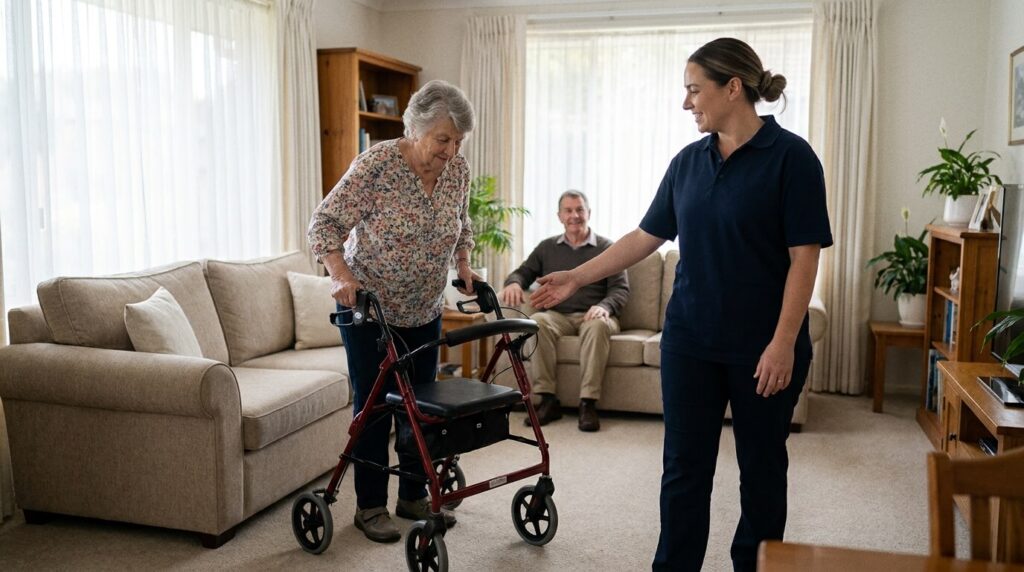
Walking and balance practice is a common goal of home therapy after a stroke.
Make the home safe
Falls are a real risk after a stroke because of weakness, balance changes and vision problems. Keep walkways clear, use night lights, remove loose rugs, and make sure shoes fit well. A home safety review by an occupational therapist can find hazards in the bathroom, kitchen and stairs. For more ideas, see our fall safety tips for seniors.
Support the therapy routine
Therapists often give exercises to practice between visits. A short, regular routine works better than one long session. Physical therapy focuses on walking, balance and strength. Occupational therapy focuses on daily tasks such as dressing, bathing and cooking. Ask the therapist to show you how to help safely, and how much help is the right amount.
Eating and swallowing safely
Some people have trouble swallowing after a stroke, which makes coughing and choking more likely. The speech therapist will teach you which food textures and liquids are safe, and some people need smaller bites, a slower pace or a certain head position, according to UMass Memorial Health. Follow those instructions exactly, and tell the nurse or doctor if the person coughs or chokes often during meals. Call 911 if the person is choking and cannot breathe or cough.
Communication and speech practice
Stroke can affect speech and understanding. Be patient, speak in short, clear sentences, give time to answer, and avoid finishing sentences unless asked. Speech-language pathology can guide you on what to practice. See also our speech therapy at home tips.

Short, calm speech practice with family can support therapy between visits.
Medicines and health checks
Give medicines exactly as prescribed, keep all follow-up visits, and bring a list of medicines to each appointment. A visiting nurse can review medicines, check blood pressure and other health signs, and teach the family what to watch for. Ask your doctor about the risk factors that apply to your loved one, such as blood pressure and diabetes, and how to manage them. Our skilled nursing team works with the doctor’s orders.
Emotional support and rest for caregivers
A stroke can bring frustration, sadness and worry for the survivor and the family. Keep routines steady, celebrate small steps, and ask the care team about counseling or support groups. A medical social worker can help families find community resources. Caregivers also need breaks, so ask other family members for help and rest when you can.
When to call the doctor
Call the doctor or nurse for new weakness, new confusion, worsening trouble swallowing, a fall, fever, new swelling or pain, or any change that worries you. Call 911 for stroke signs or a medical emergency.
What a Care Plan for a Stroke Patient at Home May Include
A care plan is set by the doctor and the home health team after a review of the person’s needs. It is reviewed and updated as the person recovers. A plan may include:
| Need | Who helps | Examples |
| Health checks and medicines | Skilled nurse | Reviewing medicines, checking blood pressure and other health signs, teaching the family |
| Walking and strength | Physical therapist | Balance, transfers, stairs, walker or cane use |
| Daily tasks | Occupational therapist | Dressing, bathing, cooking, safe home setup |
| Speech and swallowing | Speech-language pathologist | Word finding, understanding, safe food and liquid textures |
| Personal care | Home health aide | Help with bathing and dressing, when skilled care is also provided |
| Family support | Medical social worker | Community resources, long-term planning, stress |
The care team sets goals for each part of the plan and changes them over time. Not every person needs every service.
Stroke Recovery at Home: What to Expect
Recovery looks different for every person. Some people improve over weeks, while others keep making progress for months or longer with therapy and practice. The team checks progress and updates the goals. Your doctor and therapists are the best guide for your loved one, so avoid comparing with other people’s timelines.
Which Stroke Problems Does Each Home Health Service Help With?
Physical Therapy After a Stroke
A physical therapist helps with walking, balance, standing up, stairs and leg and core strength. The therapist may check whether a walker, cane or brace is right for the person, and works on preventing falls.
Occupational Therapy After a Stroke
An occupational therapist helps the person get back to daily tasks such as dressing, bathing, cooking and reaching. The therapist teaches new ways to do tasks, suggests safe changes around the home, and can work on problems like ignoring one side of the body or space, which can happen after a stroke.
Speech and Swallowing Therapy After a Stroke
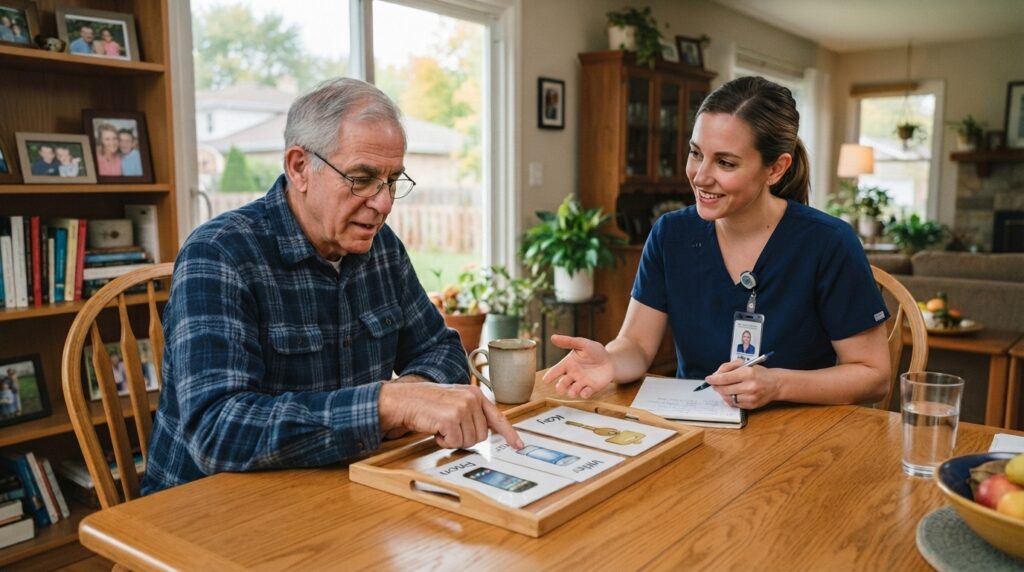
A speech-language pathologist helps with trouble speaking, finding words, understanding, reading or writing, slurred speech, and swallowing. The therapist also teaches family members how to communicate and how to make eating and drinking safer.
Skilled Nursing After a Stroke
A nurse from our skilled nursing team reviews medicines, checks blood pressure and other health signs, watches for changes, and works with the doctor. The nurse can also help with related conditions such as diabetes or heart problems, and with wound care when it is ordered.
Home Health Aides and Medical Social Work
A home health aide can help with bathing, dressing and other personal care. Under Medicare, aide visits are covered only while you also receive skilled nursing or therapy. A medical social worker helps families find community resources, plan for the long term and cope with the stress of a stroke.
Does Medicare Cover Home Health Care After a Stroke?
It can. According to Medicare.gov, you generally need all of these:
- You need part-time or intermittent skilled care, such as skilled nursing, physical therapy or speech-language pathology.
- You are homebound, which means leaving home takes a major effort.
- A doctor or allowed provider sees you and confirms you need home health, and orders your care in a plan of care.
- A Medicare-certified home health agency provides the care.
What you pay. Medicare says you pay nothing for covered home health services. For covered durable medical equipment, such as walkers or a hospital bed, you pay 20% of the Medicare-approved amount after the Part B deductible.
Therapy, aides and social work. Physical, occupational and speech-language therapy are covered if you meet certain conditions. Home health aide visits are covered only while you also receive skilled nursing or therapy, and medical social services are covered too. See how to get a home health aide with Medicare and how to qualify for Medicare home health care in Illinois.
Medicare Advantage. These plans must cover what Original Medicare covers, but may require approval or an in-network agency. See Humana Medicare Advantage home health coverage or our insurance plans page.
For the full rules, read our guide to Medicare home health care in Illinois. Eligibility is decided case by case, so we cannot promise coverage, but we can explain the steps.
What to Ask the Discharge Planner Before Leaving the Hospital
- Which home health services did the doctor order?
- Is it written in the record that the person is homebound?
- Can we choose the home health agency?
- When can home health start, and has the referral been sent?
- Who do we call if something changes before the first visit?
- Does our insurance, including a Medicare Advantage plan, need approval first?
What About TIA? Does It Qualify for Home Health Care?
A transient ischemic attack (TIA) is often called a mini-stroke, but the American Stroke Association calls it a warning stroke. Most TIA symptoms last only a few minutes, but can last up to 24 hours. TIAs generally do not cause permanent brain damage, but they are major warnings. About one-third of people who have a TIA go on to have a more severe stroke within a year. You cannot tell a TIA from a stroke on your own, so call 911 right away.
Whether home health care is appropriate after a TIA depends on the doctor’s orders and whether the person meets Medicare’s rules, such as needing skilled care and being homebound. Eligibility is decided case by case.
Frequently Asked Questions
What is home health care after a stroke?
Home health care after a stroke is skilled medical care at home, ordered by a doctor. It can include nursing, physical therapy, occupational therapy, speech-language pathology, medical social work and, when skilled care is also provided, home health aide visits. A care team builds a plan around the person’s needs.
How do you care for a stroke patient at home?
Follow the doctor’s and therapists’ instructions, give medicines as prescribed, make the home safe to prevent falls, support daily therapy practice, and watch for new warning signs. Ask the speech therapist about safe foods and liquids. Call 911 for sudden stroke symptoms, and rest and ask for help so you do not burn out.
What is included in a care plan for a stroke patient at home?
A care plan is set by the doctor and care team. It may include nursing visits to check health and medicines, therapy goals for walking, daily tasks and speech or swallowing, home safety changes, and support for the family. The plan is reviewed and updated as the person recovers.
Does Medicare cover home health care after a stroke?
It can. Medicare covers part-time or intermittent skilled home health care if you are homebound, a doctor or allowed provider orders it in a plan of care, and a Medicare-certified agency provides it. You pay nothing for covered home health services, and 20% of the approved amount for covered equipment after the Part B deductible.
Does Medicare pay for a home health aide after a stroke?
Medicare may cover part-time home health aide visits, but only while you also receive skilled nursing or therapy. If an aide is the only help you need, Original Medicare does not cover it. Medicare Advantage plans may have extra rules, so check your plan.
How soon can home health start after leaving the hospital?
It often begins within a few days of discharge, but the exact timing depends on the doctor’s orders, the referral, and the agency’s schedule. Ask the hospital discharge planner to send the referral before you leave, and tell the agency the discharge date.
What are the signs of a stroke?
Use B.E. F.A.S.T.: sudden loss of Balance, Eye or vision changes, Face drooping, Arm weakness, Speech trouble, and Time to call 911. Other sudden signs include confusion, numbness on one side and a severe headache with no known cause. Call 911 right away, even if symptoms go away.
Can a TIA qualify for home health care?
Possibly. A TIA is a warning stroke and needs immediate medical care. Whether home health is appropriate depends on the doctor’s orders and whether you meet Medicare’s rules, such as needing skilled care and being homebound. Eligibility is decided case by case.
How long does stroke recovery take at home?
It is different for every person. Some people improve over weeks, while others keep making progress for months or longer with therapy and practice. Your doctor and therapists set goals and update the plan as recovery continues. Do not rely on a single timeline.
Talk to Choice Care Home Health
Not sure what to ask for before a hospital discharge? Call (708) 489-0123 or contact our care team and we will talk through the steps. We serve families in Orland Park, Palos Heights, Oak Lawn, Will County and nearby towns.
This article is for general information and is not medical advice. A stroke is a medical emergency, so call 911 for stroke signs. Follow the instructions of your doctor, nurse and therapists.