
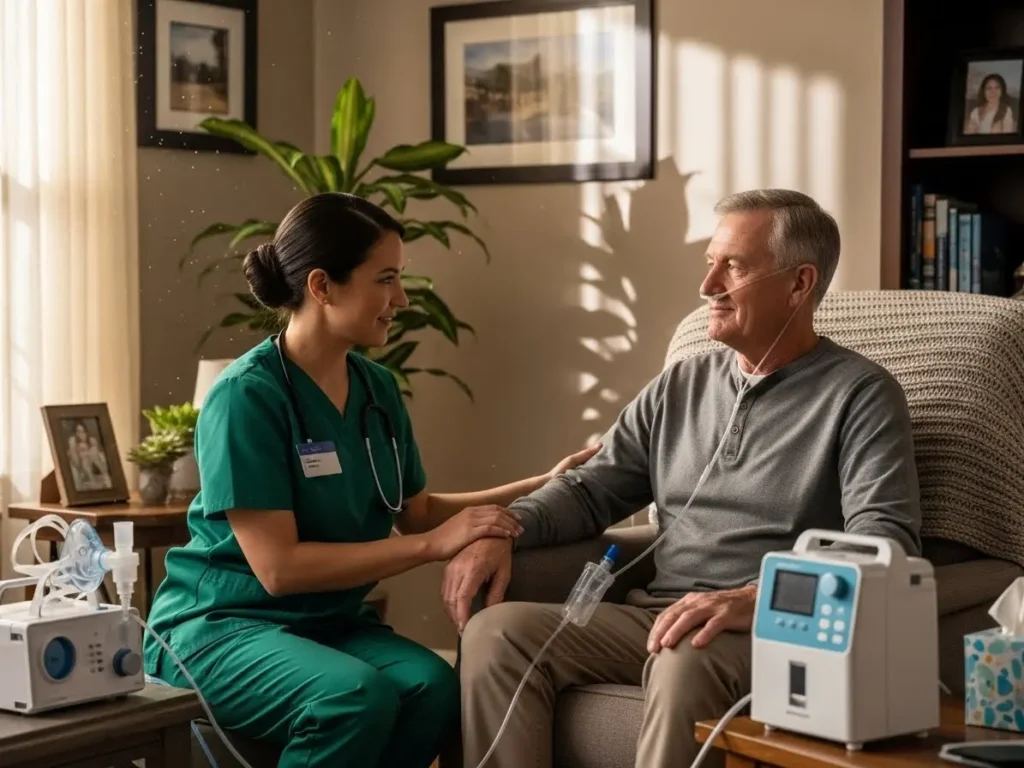
Sitting With the Fear First
So, let me start here. Breathing problems scare people. They just do. I’ve been in a lot of living rooms, kitchens, and bedrooms at two in the morning, where someone is sitting upright in bed, leaning forward, trying to catch their breath. And the family is frozen. Not because they don’t care. Because they care so much and don’t know what to do next.
I’ve seen families panic when breathing gets hard. I’ve seen grown adults cry quietly in the hallway because they’re afraid they’re going to lose someone right there at home. And I know it may feel overwhelming at first.
When lungs don’t work the way they should, everything feels harder. Talking. Walking. Eating. Sleeping. Even laughing. Families start watching every breath, every cough, every sigh. You start wondering if you’re missing something important. Home care doesn’t erase that fear. But it does soften it. It puts support around it. And that matters more than people realize.
Understanding COPD, Asthma, and Lung Disease in Plain Language
Let’s slow this down. Chronic obstructive pulmonary disease (COPD), asthma, and other forms of chronic lung disease all affect how air moves in and out of the lungs. Not in the same way, but enough that the symptoms can overlap.
With COPD, air gets trapped. Lungs don’t empty well. Breathing out becomes harder than breathing in. People feel tight, tired, and short of breath even doing small things.
Asthma is different. Airways get inflamed and narrow, often suddenly. Triggers like cold air, dust, stress, or illness can make breathing feel impossible very fast.
Other pulmonary disease conditions can cause scarring, weakness, or long term inflammation. And regardless of the label, what families see at home looks similar.
Someone who used to do everything now needs breaks. Someone who never sat still now rests a lot. Someone who loved talking now saves their words. And that change it’s hard on everyone.
What Daily Respiratory Symptoms Look Like at Home
This part is important, because hospital charts don’t show real life.
At home, lung disease looks like:
- Shortness of breath just getting dressed
- Coughing that worsens at night
- Fatigue that doesn’t improve with rest
- Needing oxygen more often or for longer
- Anxiety when breathing feels tight
- Avoiding activity because it feels scary
- And then there’s the emotional side.
People feel guilty for needing help. Families feel helpless watching someone struggle. Caregivers worry constantly about flare ups, infections, or that cough sounding different today. This is where respiratory disease care at home really shows its value. Because someone sees the pattern over time, not just a snapshot in an emergency room.
How Home Care Helps in Daily Life
When people hear home care for COPD and asthma, they sometimes imagine a nurse just popping in and out. But real home care is much more layered than that. It’s someone who:
- Watches breathing over time
- Notices small changes early
- Helps manage medications correctly
- Teaches families what’s normal and what’s not
- Helps prevent panic during breathing episodes
Home care helps turn fear into understanding. Not overnight. But gradually. And I’ve seen that make all the difference.
What Skilled Nursing Looks Like at Home
Skilled nursing for COPD and other lung conditions is not rushed. Or at least, it shouldn’t be. A nurse comes into the home and actually watches how someone breathes when they walk to the bathroom. When they talk. When they lie down. We listen to lungs. We check oxygen levels. We look at swelling, color, fatigue. And we ask questions families don’t always think to ask. Things like:
- Are mornings harder than evenings?
- Does the cough change after meals?
- Do they sleep flat or upright?
That’s how home nursing for lung disease fills in the gaps hospitals can’t see.
Teaching Inhalers, Oxygen, and Nebulizers the Right Way
This might surprise you, but many people use inhalers incorrectly for years.
- They spray too soon. Or too late. Or don’t breathe in deeply enough. Or forget to rinse afterward and get sore mouths.
- Part of home care for COPD and asthma is hands-on teaching. Over and over if needed. Without judgment.
- Same with oxygen therapy at home. Families worry about safety, tubing, flow rates, and dryness. A nurse helps make it routine instead of frightening.
- Nebulizer treatment at home becomes calmer too. No rushing. No guessing. Just a steady process that fits into daily life.
Breathing Therapy and Pulmonary Rehab at Home
Breathing therapy isn’t about forcing lungs to do more. It’s about using them smarter.
Pulmonary rehabilitation at home focuses on:
- Pursed lip breathing
- Energy conservation
- Gentle strengthening
- Controlled activity
- Rest without guilt
- And, it builds confidence.
People stop holding their breath during movement. They stop panicking as quickly. They learn that breathlessness doesn’t always mean danger. That’s huge.
Managing Medications and Monitoring at Home
This is one of the biggest reasons how home care helps COPD patients become clear.
Medications for breathing disorders are complex. Inhalers, pills, steroids, rescue meds, maintenance meds. Timing matters.
Home care helps families organize medications, understand side effects, and notice when something isn’t working as well anymore.
Monitoring oxygen levels at home also becomes less scary. Families learn what numbers matter, when to act, and when to stay calm.
- Creating Safety and Comfort in the Home
- Small changes matter more than people think.
Keeping pathways clear so oxygen tubing doesn’t trip someone. Managing humidity. Reducing dust. Planning activities around energy levels.
Caring for someone with lung disease at home means building routines that protect breathing without making life feel clinical. That balance is important.
Life Beyond Hospital Walls
I’ve seen people thrive more at home than they ever did bouncing in and out of the hospital. Home care reduces readmissions because problems are caught early. But more importantly, it gives people dignity. They’re not just patients. They’re people living their lives.
A Note About Home Health Care in Illinois
When families explore options for home health care in Illinois for breathing support, they may hear about providers such as Choice Care Home Health. Agencies like this often help connect patients and families with skilled respiratory nursing, monitoring, and individualized care plans suited to each person’s needs. They’re part of the broader system that supports lung disease care at home.
Common Questions Families Ask Me
Will home care reduce flare ups?
Often, yes. Early detection and consistent support make a big difference.
Is oxygen safe at home?
Yes, when used correctly. Teaching and routine are key.
How often do nurses visit?
It depends on needs. Some weekly. Some more often during changes.
Can breathing therapy really be done at home?
Absolutely. And many people do better in their own space.
What if symptoms get worse?
Home care helps families know when to call, and when to breathe and wait.
Can asthma be treated at home?
Yes. Asthma home nursing care focuses on prevention, triggers, and correct medication use.
Closing Thought
If you’re caring for someone with COPD, asthma, or any chronic lung disease, it’s okay to feel tired. It’s okay to feel scared. It’s okay to need help. Home care doesn’t fix lungs. But it supports people. And families. And breathing moments that feel a little easier than the day before. Read more