
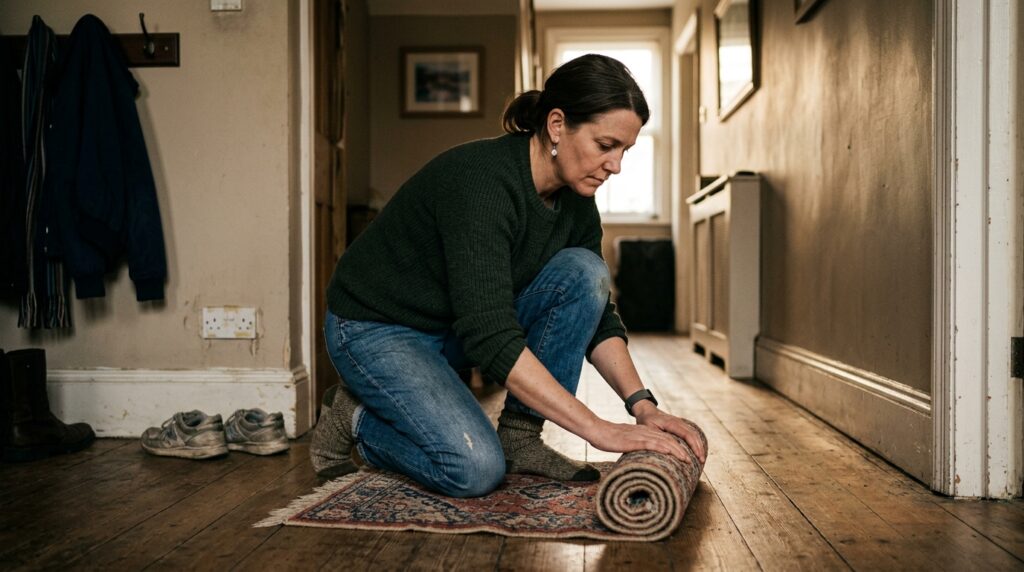
The nurse is coming Thursday morning. You’ve spent the last twenty minutes walking through your mother’s house in Orland Park, IL, looking at it differently than you have in years, noticing the throw rug by the bathroom door that’s always slid a little, the hallway bulb that’s been out since spring, the stack of magazines on the chair where someone would need to sit.
Getting your home ready for a home health nurse takes about thirty minutes and comes down to seven things: clear the walking paths, fix the lighting, set up the room where the visit will happen, make the bathroom reachable, clear the front entry, secure any pets, and open up space at the bedside. It’s about safety and access, not cleaning.
Quick answer: To get your home ready for a home health nurse, clear clutter and rugs from walking paths, turn on and replace lighting in hallways and bathrooms, set aside a well-lit place to sit, secure pets in another room, and make sure the front entry is clear and visible.
Key Takeaways
- This is about safety and access, not housekeeping. Nurses work in real homes every day and aren’t evaluating your cleaning.
- Walking paths and lighting matter most, because clutter and dim rooms are the two hazards most likely to cause a fall.
- The whole checklist takes about thirty minutes the day before or the morning of.
- Documents, medications, and insurance cards are a separate task. Our patient information page covers the paperwork side.
- Choice Care Home Health serves Chicago and the southwest suburbs, including Orland Park, Palos Heights, and Palos Hills, across Cook, DuPage, and Will Counties.
Why the Physical Home Matters More Than You’d Think
A home health nurse is going to assess the space your loved one lives in, not just the person sitting in the chair. Where the furniture sits, how well the hallway is lit, and whether there’s a clear path to the bathroom are all part of what shapes the plan of care.
There’s a hard reason behind that. The Centers for Disease Control and Prevention reports that more than 14 million older adults, about 1 in 4, fall every year. A large share of those falls trace back to ordinary household hazards: loose rugs, cords across a walkway, a burnt-out bulb at the top of the stairs. Clearing those before the visit doesn’t just make the assessment easier. It removes real risk from the house today.
Getting Your Home Ready for a Home Health Nurse: The 7-Point Checklist
- Clear the walking paths. Move throw rugs, extension cords, magazine stacks, and small furniture out of hallways and the route between the front door, the living room, and the bathroom. Loose rugs are the single most common tripping hazard in a home.
- Fix the lighting. Replace burnt-out bulbs in hallways, stairwells, and the bathroom before the visit, and turn those lights on ahead of time. If there are nightlights, plug them in. Dim lighting is one of the most fixable fall risks there is.
- Set up the room where the visit will happen. Pick a quiet room with a comfortable chair, good light, and enough open floor space for the nurse to set up a blood pressure cuff or kneel to check swelling in the feet. Clear off one side table so there’s a surface to work from.
- Make the bathroom reachable. The nurse may check the bathroom for safety, looking at grab bars, shower access, and toilet height. Clear the path and make sure the door opens fully without hitting anything.
- Clear the front entry. Make sure the walkway is clear, the house number is visible from the street, and the porch light is on for an early morning or late afternoon visit. During a Chicago winter, salt or shovel the walk. A nurse carrying a bag on an icy step is a problem for everyone.
- Secure any pets. Even calm, friendly dogs and cats become a distraction or a tripping hazard during an assessment. Plan to keep them in a separate room for the hour or so the nurse is there.
- Open up space at the bedside. If the plan of care involves wound care, injections, or anything the nurse will do while your loved one is in bed, clear a path on at least one side of the bed and move nightstand clutter out of reach.
What to Check, Room by Room
| Area | What to Check | Why It Matters |
| Front entry and walkway | Clear path, visible house number, porch light on, walk salted in winter | The nurse arrives carrying equipment and needs safe footing |
| Hallways | Rugs removed or secured, cords tucked away, working overhead light | This is the route between every room the nurse will use |
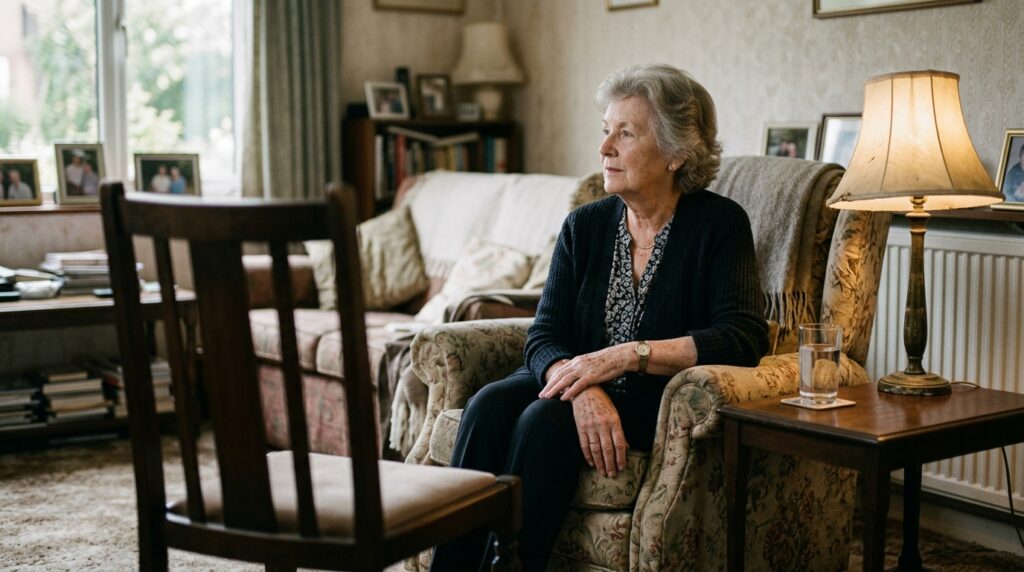
| Living room | One clear chair, a cleared side table, good lamp light | Most of the assessment happens here |
| Bathroom | Clear doorway, working light, note any existing grab bars | Safety assessment often includes the bathroom |
| Bedroom | Clear space on one side of the bed, nightstand cleared | Needed if care is delivered at the bedside |
| Stairs | Working light at the top and bottom, nothing left on the steps | Stairs are where household falls do the most damage |
Not sure what your loved one’s plan of care will actually involve? Call Choice Care Home Health at (708) 489-0123. We can tell you what the nurse will need before the visit, so you’re not guessing.
What You Don’t Need to Do
You don’t need to deep clean, rearrange furniture permanently, hide ordinary clutter, or apologize for how the house looks. Home health nurses visit dozens of real homes a month. They are looking at safety and access, not tidiness, and a house that looks unnaturally staged actually gives them less useful information about how your loved one really lives.
You also don’t need to fix every hazard you find. If you spot something you can’t easily change, like a bathroom with no grab bars or a step down into the garage, leave it and point it out. That’s exactly what the nurse is there to assess.
Does Any of This Affect Cost or Coverage?
No. How your home looks has no bearing on insurance. When a physician certifies that home health care is medically necessary and the patient meets homebound criteria, Original Medicare typically covers the visits in full, generally with no copay. Our page on Medicare coverage for home health care in Illinois covers that side separately, and if you’re still working out whether your loved one qualifies at all, our guide to who qualifies for home health care walks through it.
Does the Checklist Change Based on Who’s Coming?
Slightly. A skilled nursing visit for wound care or medication management benefits most from clear bedside access and a good light source. A home health aide visit is more hands-on with bathing and dressing, so it helps to have towels, a change of clothes, and bathroom supplies within reach rather than stored high in a closet.
If a therapist is coming, they’ll want to see the spaces where your loved one actually struggles, so don’t pre-clear the stairs or the tub. Let them watch the real thing.
For Discharge Planners and Case Managers
If you’re preparing a family for discharge from a Chicago-area hospital, a short home safety checklist handed over before they leave tends to reduce first-visit delays and gives the intake nurse a cleaner picture on arrival. Choice Care Home Health is Medicare certified and ACHC accredited, and we’re glad to provide printable copies of this checklist for your unit. Reach us at (708) 489-0123.
Before Thursday Morning
If you’re already noticing the rug by the bathroom door, you’ve done the hard part, which is looking at a familiar house with fresh eyes.
Choice Care Home Health serves Chicago and the southwest suburbs, including Orland Park, Palos Heights, and Palos Hills, and our full range of home health services is built to make that first visit feel manageable. Call us at (708) 489-0123, or reach out through our contact page, and we’ll answer whatever’s still unclear before the nurse knocks.
Our Service Areas
Service Area Description
FAQ Section
How do I get my home ready for a home health nurse?
Clear walking paths of rugs, cords, and clutter, fix and turn on lighting in hallways and bathrooms, set aside a well-lit chair for the assessment, secure pets in another room, and make sure the front entry is clear and visible. The whole process takes about thirty minutes.
Do I need to clean the house before a home health nurse visits?
No. Nurses work in ordinary homes every day and aren’t assessing housekeeping. Focus on safety and access instead, meaning clear walkways and working lights. An unnaturally tidy house actually tells the nurse less about how your loved one really manages day to day.
Should I put my dog away during the visit?
Yes. Even calm, well-behaved pets can distract from the assessment or create a tripping hazard while the nurse moves through the home carrying equipment. Plan to keep them in a separate room for the hour or so the visit takes. If your loved one finds the pet calming, mention that to the nurse, who can decide when it’s safe to bring them back in.
Should I fix hazards I find before the nurse arrives?
Only the easy ones, like a loose rug or a burnt-out bulb. Leave anything structural, such as a missing grab bar or an awkward step, and point it out instead. Identifying and planning around those hazards is part of what the nurse is there to do.
Which room should the nurse and patient sit in?
Choose a quiet room with a comfortable chair, good lighting, and enough open floor space for the nurse to work, usually a living room. Clear one side table so there’s a surface available, and avoid rooms with a television or radio running.
Does preparing my home affect whether Medicare covers the visit?
No. Coverage depends entirely on a physician’s order certifying medical necessity and on whether the patient meets homebound criteria. The condition of the home has no bearing on eligibility or payment. Preparation simply makes the visit safer and more efficient, and gives the nurse a clearer picture of the space.
How far ahead should I get the home ready?
The day before or the morning of is plenty. Most of the checklist, such as moving rugs, clearing a chair, and turning on lights, takes under thirty minutes total. Replacing burnt-out bulbs is the only item worth handling a day or two early, since it may mean a trip to the store.