
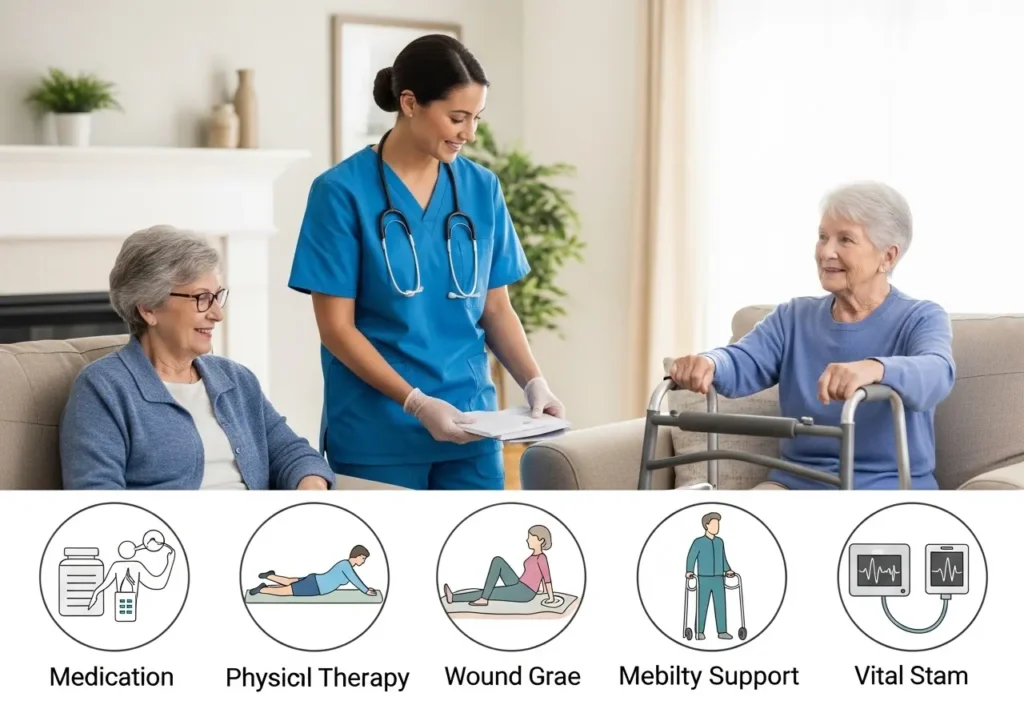
Introduction
When your mom starts struggling with daily tasks after her hip surgery, or your dad’s diabetes becomes harder to manage on his own, the question usually isn’t whether he needs help, it’s what kind of help makes the most sense. Many families in Illinois find themselves searching for answers late at night, trying to understand what’s actually available and how it all works.
Home health care can feel confusing at first. The terminology alone is enough to make anyone’s head spin. Skilled nursing, personal care, companion services, what do these terms actually mean, and how do you know which one fits your situation? This guide walks through the main types of home health care services available across Illinois, from Chicago neighborhoods to small towns downstate, so you can make sense of your options.
What Is Home Health Care?
Home health care refers to professional medical and non medical services provided in someone’s home rather than in a hospital or facility. The idea is simple: many people recover better, feel more comfortable, and maintain their independence longer when they can stay in familiar surroundings.
There’s an important distinction worth understanding right away. Some home health care involves actual medical treatment things like wound care, injections, or physical therapy. These services require licensed healthcare professionals. Other types focus on daily living assistance, like help with bathing, meal preparation, or companionship. Those don’t necessarily require medical licensing, though good agencies still train their caregivers carefully.
Both types matter. Sometimes families need one or the other. Sometimes they need both, especially after a hospitalization or during a chronic illness.
The 7 Types of Home Health Care Services
1. Skilled Nursing Care
Skilled nursing means care provided by a registered nurse or licensed practical nurse. This isn’t someone who just checks in its medical care delivered at home by a professional who can assess symptoms, manage complex conditions, and coordinate with doctors.
Skilled nurses handle tasks like changing surgical dressings, administering IV medications, monitoring vital signs, and watching for complications after a hospital discharge. In Illinois, skilled home health care agencies must be licensed by the Illinois Department of Public Health, and nurses work under a physician’s orders.
Here’s a real example: After Mr. Patterson came home from the hospital following heart surgery, a nurse visited three times a week to check his incision, monitor his heart rate and blood pressure, adjust his medications based on his doctor’s protocol, and teach him warning signs to watch for. That level of medical oversight made it possible for him to recover at home instead of spending weeks in a rehab facility.
2. Physical, Occupational, and Speech Therapy
Therapy services help people regain abilities after an injury, surgery, or illness. Physical therapists work on mobility, strength, and balance. Occupational therapists focus on daily activities like dressing, cooking, and bathing. Speech therapists address swallowing difficulties and communication problems, often after a stroke.
These therapists come to the home, which matters more than you might think. They see the actual environment, the narrow hallway, the slippery bathroom tile, the steep front steps and can teach strategies that work in that specific space. A therapist might rearrange furniture to create a safer path or recommend a grab bar in the exact spot where someone struggles most.
Illinois requires these therapists to be licensed, and Medicare typically covers home based therapy if a doctor orders it and the person is homebound.
3. Personal Care Assistance
Personal care assistants help with activities of daily living: bathing, dressing, grooming, toileting, and transferring from bed to chair. This is non medical care, but it’s often what makes the difference between someone staying home safely or needing to move to a facility.
Sometimes families ask whether this type of care is really necessary if a family member can “still do most things.” The answer usually depends on safety and dignity. If your mom can technically bathe herself but risks falling every time she tries, or if getting dressed exhausts her so much she skips it, personal care assistance might be exactly what she needs.
Caregivers providing personal care in Illinois should be trained, even though they’re not medical professionals. Good agencies provide training in fall prevention, proper lifting techniques, and recognizing when something’s wrong that needs medical attention.
4. Medication Management
Many seniors take multiple medications with complicated schedules. Missing doses, taking too much, or mixing up pills can lead to serious problems and it happens more often than most people realize.
Medication management services help organize pills, remind people when to take them, and monitor whether medications are actually being taken correctly. Depending on the person’s needs and the level of service, this might mean a caregiver setting up a pill organizer each week, providing verbal reminders, or actually administering medications under nursing supervision.
In Illinois, there are regulations about who can do what. Non medical caregivers can remind and observe, but administering medications typically requires nursing credentials, especially for injections or anything more complex than handing someone their pills.
5. Chronic Disease Management
Living with diabetes, COPD, congestive heart failure, or other chronic conditions often means daily monitoring, lifestyle adjustments, and early intervention when symptoms change. Home health care for seniors in Illinois frequently focuses on this type of ongoing management.
A nurse might visit regularly to check blood sugar levels, teach insulin administration, monitor breathing, watch for swelling that signals fluid retention, or adjust care plans based on changing symptoms. The goal is preventing emergencies and hospital readmissions by catching problems early.
This type of care often combines skilled nursing with education. Families learn warning signs, patients understand their conditions better, and everyone feels more confident managing day to day challenges.
6. Post Surgical Care
After surgery, many people need medical monitoring during recovery but don’t need to stay in the hospital or a rehabilitation facility. Post surgical home care bridges that gap.
This typically includes wound care, pain management, monitoring for infections or complications, helping with mobility restrictions, and coordinating follow up appointments. The intensity and duration depend on the surgery. Someone recovering from a knee replacement might need daily visits initially, then taper to weekly checks. Someone after minor surgery might just need a few visits to ensure proper healing.
Medicare usually covers post surgical home health care when a doctor orders it and specific criteria are met. The person generally needs to be homebound and require skilled services, not just personal assistance.
7. Companion and Emotional Support Care
Loneliness affects health. Isolation increases risks of depression, cognitive decline, and even physical illness. Companion care addresses this by providing regular social interaction, conversation, light activity, and a reassuring presence.
Companions don’t provide medical care or intensive personal care. They might prepare a meal together, play cards, go for a walk, work on a puzzle, or simply sit and talk. They offer structure to the day and human connection that matters deeply, especially for someone who lives alone.
In areas like Chicago, where families might live across town in traffic choked neighborhoods, or downstate where adult children might be hours away, companion care helps fill gaps that distance creates.
Home Health Care Across Illinois
Illinois is a big state with very different communities, and that affects how home health care works in practice.
In Chicago and the surrounding suburbs, there’s usually a wide selection of Illinois home health care providers. Agencies serve specific neighborhoods some focus on the North Side, others on the South Side or western suburbs. Families often have options and can compare agencies, though that also means doing more research to find the right fit.
Response time can be quick in metropolitan areas. Need care to start this week? Often possible. Need a therapist who speaks Polish or Spanish? Usually available. The challenge in Chicago is sometimes navigating costs, especially if insurance doesn’t cover everything.
In smaller towns and rural areas, options narrow. There might be one or two local agencies, or services might come from a larger town 30 minutes away. This doesn’t mean the care is worse, often it’s excellent but families have less choice, and wait times can be longer. Starting care might take a week or two instead of a few days.
Geography matters for another reason: some agencies focus on specific types of care. One might specialize in Alzheimer’s care, another in pediatric home health. Knowing what’s available in your specific area helps set realistic expectations.
How to Choose the Right Provider
Finding good home health care in Illinois means looking beyond the first search result or the agency with the nicest website. Here’s what actually matters.
- Licensing and certification: Any agency providing skilled medical care must be licensed by the Illinois Department of Public Health. You can verify this. Medicare certified agencies meet federal standards, which adds another layer of oversight.
- Background checks and training: Ask directly how caregivers are screened. Do they run criminal background checks? How are caregivers trained? What’s the process if you’re unhappy with a specific caregiver?
- Care plan development: Good agencies assess the person’s needs thoroughly before starting service, create a written care plan, and update it regularly. You should understand exactly what services will be provided and how often.
- Communication: Who do you call with questions or concerns? How quickly do they respond? Will you have the same nurse or caregiver consistently, or will it rotate? Consistency matters for building trust and recognizing subtle changes.
- Medicare and insurance: If Medicare or insurance will cover services, make sure the agency accepts your coverage and clearly explains what’s covered versus what you’d pay out of pocket.
It’s reasonable to interview multiple agencies, even if one comes highly recommended. Each family’s situation is different, and what works for your neighbor might not be the best fit for your dad.
Frequently Asked Questions
What’s the difference between skilled and non medical home care?
Skilled care requires a licensed healthcare professional, a nurse or therapist and involves medical treatment or monitoring. Non medical care helps with daily activities like bathing, dressing, and companionship but doesn’t involve medical procedures. Some people need one, some need the other, some need both.
Does Medicare cover home health care in Illinois?
Medicare covers skilled home health care if a doctor orders it, you’re homebound, and you need intermittent skilled nursing or therapy. It doesn’t typically cover 24hour care or personal care when that’s the only service needed. The rules are specific, so it’s worth discussing your exact situation with the agency and Medicare directly.
How often do nurses or caregivers visit?
It depends entirely on the care plan. After hospitalization, a nurse might come daily or several times a week initially, then taper off. Personal care might be a few hours three times a week, or several hours daily. Companion care could be once or twice a week for a few hours. The schedule should match actual needs, not a one size fits all formula.
Is home care safer than a nursing facility?
There’s no universal answer. For some people, home is definitely safer and more comfortable. They recover better in familiar surroundings with one on one attention. For others who need intensive medical monitoring or have severe mobility issues, a facility might actually be safer. The right choice depends on medical needs, home environment, and available support.
How quickly can services start?
In urban areas, non medical care can sometimes start within days if the agency has availability. Skilled care often takes a bit longer because it requires physician orders and coordination with insurance. In less populated areas, count on one to two weeks. If you’re planning ahead for example, before a scheduled surgery starting the process early helps.
What if we’re unhappy with a caregiver?
Reputable agencies should address concerns quickly and seriously. You can request a different caregiver, and good agencies want to make that work. If problems persist or the agency isn’t responsive, you’re not locked in; you can switch agencies. The person receiving care should feel comfortable and safe with whoever is in their home.
Finding What Works
Choosing home health care isn’t about finding the objectively best option. It’s about finding what works for your specific situation, the person’s medical needs, their personality, their home environment, what family can realistically provide, and what professional help makes sense.
Most families don’t get it perfect immediately. Maybe the first schedule doesn’t quite work, or you realize after a couple weeks that you need more help than you initially thought, or different help. That’s normal. Good agencies adjust as they learn more about what someone actually needs.
The important thing is starting from a place of understanding what’s available, what different types of care actually involve, and what questions to ask. Illinois offers many options for keeping people safe and comfortable at home. Knowing what those options are makes the path forward much clearer. Read more