

Introduction
So, let’s talk about this calmly. Because when families hear the words respiratory home care, it usually doesn’t happen during a peaceful moment. It happens after a doctor clears their throat. Or after a hospital stay that felt too long. Or after you watched someone you love struggle to catch their breath, and you couldn’t help.
I’ve been doing home health nursing and respiratory support for a long time. Long enough to know that breathing problems scare people more than almost anything else. And the words used around breathing problems don’t help much. People nod. They say okay. But they go home confused.
I’ve seen families misunderstand what respiratory care really is. They think it’s something rare. Or extreme. Or temporary only. Or, the opposite. Permanent and hopeless. It’s usually none of those things exactly.
Respiratory home care is simply care for breathing problems that happen in the home. That’s the heart of it. No fancy meaning beyond that. But, there’s more to understand. And we’ll take it slow.
Why Breathing Problems Feel So Overwhelming
Breathing is automatic. Until it isn’t. You don’t think about it when it’s working right. And when it starts to feel hard, everything else fades away. Eating. Sleeping. Talking. Thinking clearly. It all gets wrapped around that feeling of air not moving the way it should. Families feel helpless. I’ve heard it so many times.
- I don’t know if I’m watching them breathe too much.
- I don’t know what’s normal anymore.
- I’m afraid to sleep.
Those fears don’t mean you’re overreacting. They mean you’re paying attention.
Respiratory home care exists because breathing problems don’t follow neat schedules. They don’t respect office hours. And they don’t always mean someone needs to be in a hospital bed.
Home is where people relax their shoulders. And when shoulders relax, breathing often follows.
What Respiratory Home Care Really Means
So, what does it actually look like?
Respiratory home care is support for people who have trouble breathing well on their own. That trouble can come from many things. Lung disease. Heart issues. Muscle weakness. Infections. Aging. Surgery recovery. Sometimes people think respiratory care is only oxygen. That’s a big misunderstanding. Oxygen is one tool. Sometimes it’s needed. Sometimes it’s temporary. Sometimes it’s part of a bigger picture.
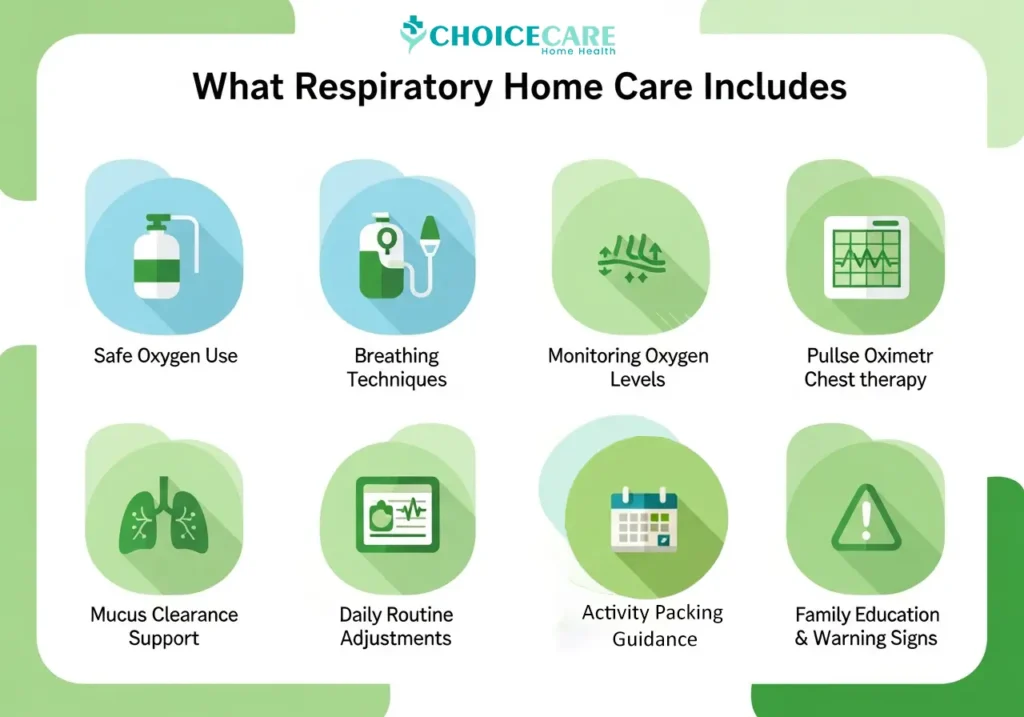
Respiratory home care can include:
- Helping someone use oxygen safely
- Teaching breathing techniques
- Monitoring oxygen levels and breathing patterns
- Helping clear mucus from the lungs
- Adjusting daily routines to avoid breathlessness
- Teaching families what warning signs look like
And, sometimes it’s just reassurance. Knowing someone is checking in. Knowing you’re not guessing alone.
Why Doctors Recommend Respiratory Care at Home
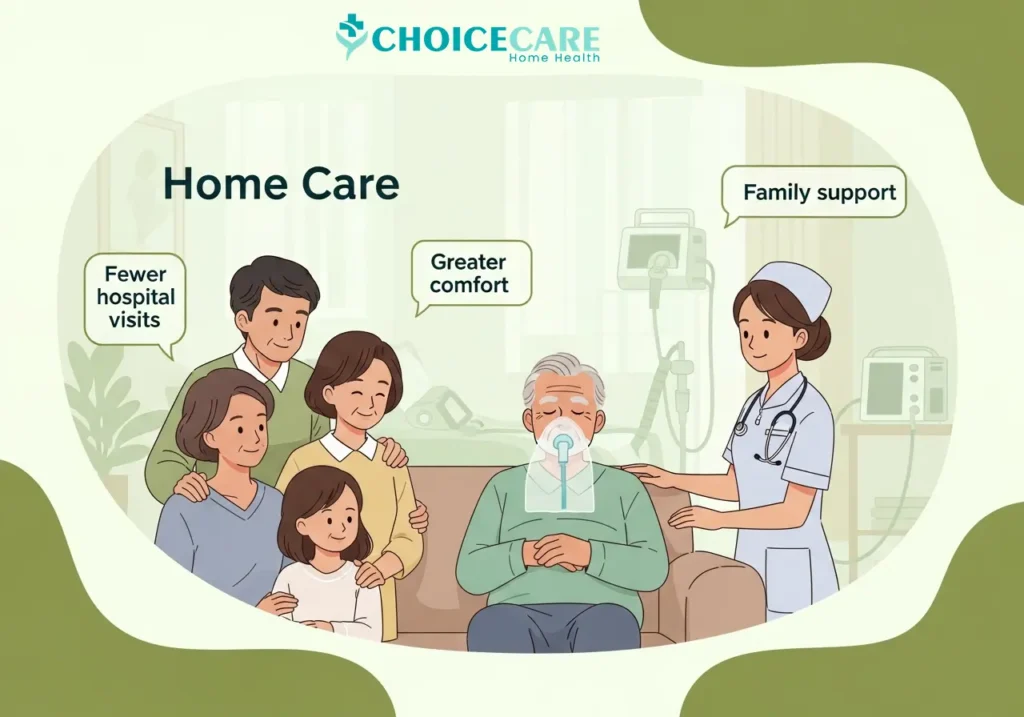
Hospitals are good at emergencies. They’re not great at healing. People sleep poorly there. They’re surrounded by noise. Lights. Interruptions. And for breathing problems, stress makes everything worse. When someone is stable enough, doctors often want them home. But not alone. Not unsupported. Respiratory home care bridges that gap. It allows breathing issues to be watched closely without keeping someone in a hospital bed. It helps catch small changes before they become big ones. And for many people, it prevents repeat hospital visits. Which matters more than most families realize at first.
Who Usually Needs Respiratory Home Care
There’s no single type of person who needs this kind of care. But there are patterns.
Seniors with chronic breathing problems
Aging lungs don’t bounce back the way younger ones do. Conditions like COPD, asthma, pulmonary fibrosis, or heart related breathing issues become harder to manage alone. This is common in senior care in Chicago and similar cities where older adults want to stay in their own homes.
Adults recovering from illness or surgery
After pneumonia. After COVID. After major surgery. Breathing can remain weak even when everything else looks fine. Respiratory home care helps people rebuild strength without rushing.
People with long term respiratory diseases
Some conditions don’t go away. But they can be managed. That’s where Home Care Options for Respiratory Diseases come in. Not cures. Support.
People who tire easily or panic when breathing feels off
Anxiety and breathing are closely linked. Sometimes care is about breaking that cycle.
What Breathing Problems Can Look Like at Home
This part surprises families. Breathing trouble isn’t always dramatic. It’s often quiet.
You might notice:
- Someone avoiding stairs
- Talking less
- Sitting upright to sleep
- Eating smaller meals
- Getting tired after simple tasks
- And, these signs can change daily.
One day looks fine. The next feels heavy. That doesn’t mean failure. It means breathing is sensitive to weather, activity, emotions, and rest. Respiratory home care teaches families to notice patterns, not panic over single moments.
What Services Are Included in Respiratory Home Care
This depends on the person. Always.
Nursing support
Home health nurses monitor breathing, oxygen levels, and overall health. They notice subtle changes that families often miss.
Respiratory therapy
This can include breathing exercises, airway clearance, equipment education, and stamina building. When people search for home respiratory therapy near me, this is often what they’re hoping for.
Equipment support
Oxygen concentrators. Nebulizers. CPAP or BiPAP machines. The care includes teaching, troubleshooting, and safety checks.
Education for families
This matters more than any machine. Families learn what’s normal. What’s not. When to wait. When to call. When to act fast. Knowledge lowers fear.
It’s Not Just Oxygen
I say this a lot. Sometimes people think once oxygen is involved, everything changes forever. That’s not always true. Some people need oxygen temporarily. Some only during activity or sleep. Some need it long term but still live full lives. Respiratory home care helps make oxygen a tool, not a sentence.
How Respiratory Home Care Helps at Home
It brings calm into a tense situation. People breathe better when they feel safe. When routines are adjusted. When someone explains things slowly. Respiratory care helps reduce emergency calls. Fewer rushed trips. Less guessing. And families stop feeling alone.
Understanding Home Care Options for Respiratory Diseases
This part gets confusing fast. There are many Home Care Options for Respiratory Diseases, and not all are the same. Some focus on nursing. Some on therapy. Some on general assistance. The key is matching care to need. Not more. Not less. Some families only need short term support. Others need ongoing help as conditions change.
Respiratory Care and Seniors at Home
For older adults, breathing affects everything.
Sleep. Appetite. Balance. Mood.
That’s why respiratory support often blends into senior home care in Chicago and similar communities. It’s not separate. It’s part of daily life. In home health care for seniors in Chicago, respiratory care often works alongside help with bathing, meals, and mobility. Breathing doesn’t exist in isolation.
When Respiratory Care Becomes Part of Daily Life
This is where things settle.Care becomes routine. Oxygen becomes the background. Exercises become habits. People learn their limits. And their strengths. Families relax a little. They sleep better. And breathing, while still monitored, becomes less frightening.
Finding Respiratory Help Near You
Families usually search late at night. Quietly. They type things like in home respiratory therapy near me or home help for seniors in Chicago. What they really want is reassurance that someone nearby understands. Local matters. Familiarity matters.
Respiratory Care and Other Senior Services
Respiratory home care often works alongside older health care services in Chicago and similar areas.
- Medication management. Physical therapy. Personal care.
- Breathing is one piece of a larger picture.
- A Note About Home Health Agencies
- There are many agencies providing care. Some are large. Some small.
Choice Care Home Health is one example people mention when talking about the best home health care services in Illinois. Like others, they coordinate nursing and respiratory support when prescribed. What matters most is fit. Comfort. Communication.
Common Questions Families Ask
What exactly is respiratory home care, and how does it help my loved one breathe better at home?
Respiratory home care is support for people who have trouble breathing, delivered right in their own home. It’s not just oxygen or machines. It can include monitoring breathing, teaching breathing exercises, helping clear lungs, and making daily routines easier so your loved one feels more comfortable. It helps reduce stress, keeps breathing safer, and often prevents trips back to the hospital.
Who usually needs respiratory home care, and how do I know if my family member should have it?
People who benefit most are seniors with chronic lung problems, adults recovering from surgery or illness, and anyone whose breathing is fragile or changes frequently. Signs can include shortness of breath, fatigue during normal tasks, or difficulty sleeping comfortably. A doctor or home care nurse can help decide if respiratory care at home is the right step.
What kind of services does respiratory home care include, and what will I see at home?
Services vary, but they usually include nursing support, breathing therapy, oxygen management, and family education. Sometimes it also includes help with everyday activities if breathing problems make them harder. You might notice a nurse teaching safe oxygen use, therapists guiding breathing exercises, or family members learning how to spot early warning signs.
Can someone with respiratory home care still live a normal, meaningful life?
Yes. Life might look a little different resting more, pacing activities, or using equipment like oxygen but people can still eat, visit, enjoy hobbies, and spend time with family. Respiratory home care is designed to keep people safe and comfortable while letting them stay home rather than in a hospital.
How do I find the right home care for respiratory problems near me?
Families often search for home respiratory therapy near me or home help for seniors in Chicago. There are many Home Care Options for Respiratory Diseases, and the key is choosing one that fits your loved one’s needs. Agencies like Choice Care Home Health coordinate nursing, therapy, and equipment support based on doctor recommendations. The best care is clear, responsive, and makes both the patient and family feel supported.
What I Wish Families Knew Earlier
- I wish families knew that breathing problems don’t mean the end of independence.
- I wish they knew it’s okay to ask the same question twice. Or three times.
- I wish they knew that learning takes time. And mistakes happen. And that’s okay.
- And, I wish they knew they’re not failing when they feel overwhelmed. They’re human.
A Gentle Closing
So, if you’re here because you’re worried, that makes sense. Respiratory home care isn’t about machines taking over a home. It’s about support fitting into life. Breathing doesn’t have to be perfect. It just needs help sometimes. And with the right care, people often find their rhythm again. Slow. Steady. Humans. That’s what this is really about. Read more