
Introduction: Why Breathing Problems Scare Families
I’ve sat at a lot of kitchen tables just like this one. Usually late afternoon. The house is quiet except for a ticking clock or the hum of the fridge. Someone has a notebook. Someone else keeps checking their phone. And there’s this weight in the room, fear, mostly. Tired fear.
When breathing gets hard, everything else fades a little. It’s scary in a way that stomach pain or a bad knee just isn’t. Breathing is life. So when it sounds wrong, or looks wrong, families panic. I’ve seen it over and over.
And, I get it. I’ve been a home health nurse for years, helping people with respiratory problems in their homes. COPD, pneumonia, chronic lung disease I’ve seen families lose sleep, pacing the floor while someone they love struggles to breathe. And sometimes, that fear can make things worse, because anxiety makes breathing harder, too.
That’s why home care often helps. Because hospitals are good at emergencies, but most of the day to day struggles happen at home. That’s where care, comfort, and a steady presence make a difference.
Understanding Respiratory Diseases
When people hear respiratory diseases, they think one thing, one diagnosis. It’s not like that. Respiratory diseases are more like a big umbrella. COPD, asthma, pneumonia, pulmonary fibrosis, chronic bronchitis, emphysema, even lung damage from infections or old injuries.
COPD chronic obstructive pulmonary disease is probably the one I see most often. People with COPD often feel short of breath just walking across a room. And sometimes, it sneaks up on families slowly. One day, they can climb stairs fine, and the next suddenly, they’re stopping halfway, holding their chest.
Asthma is a bit different. It comes and goes, usually in attacks. One minute your loved one is fine, the next they’re wheezing and anxious, reaching for their inhaler.
Pneumonia can feel sudden and scary. Fever, chills, coughing sometimes it hits hard enough that families wonder if they should rush to the hospital. And that’s okay. It’s always okay to call if something feels off.
The important thing to remember is that these diseases affect breathing in ways you can watch, and in ways you can’t. That’s why having someone trained who knows what to look for makes a huge difference at home.
What Breathing Problems Look Like at Home
I want you to hear that breathing problems don’t always look dramatic. Sometimes it’s subtle. You might notice:
- Shortness of breath during normal activities, like walking to the bathroom or cooking dinner.
- Rapid or shallow breathing, especially at night.
- Persistent coughing, sometimes with mucus.
- Fatigue, because your loved one is working hard to get air.
- Anxiety or restlessness, which often comes from the body sensing low oxygen.
Sometimes it looks scary even when it isn’t an emergency. I’ve had families call me in a panic because someone’s chest was moving fast, but after a quick check, oxygen levels were okay. And sometimes, even when things look calm, the numbers tell another story. That’s why monitoring at home matters.
Why Home Care Makes a Difference
Home care changes everything. Not in a flashy way, but quietly. It brings safety and calm. Fewer hospital trips. Less frantic pacing at night. And honestly, it makes patients feel more secure.
I’ve seen families panic when breathing gets worse, especially at night. But when there’s a routine, a nurse checking in, oxygen set up correctly, medications organized it takes a little of that fear away. Not all of it, of course. But some. And that matters.
Home care isn’t just about medical stuff. It’s about comfort, familiar surroundings, and someone who knows what subtle changes mean. That’s often more important than any treatment.
What Respiratory Home Care Really Looks Like
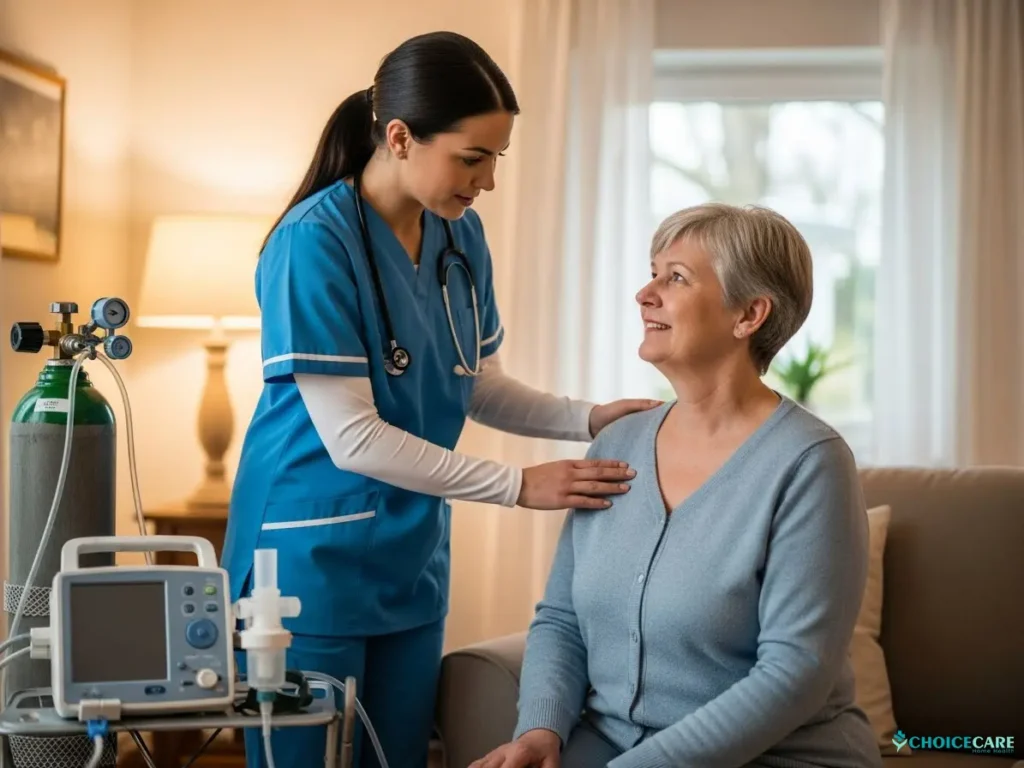
When I walk into a home to help someone with a respiratory disease, here’s what I do.
- Daily monitoring: Checking oxygen levels, breathing patterns, heart rate. Not every day feels the same, so we pay attention to small changes.
- Medication help: Making sure inhalers, nebulizers, or pills are taken correctly. I’ve had patients take a puff of an inhaler wrong for weeks before we caught it.
- Breathing support: Helping patients do breathing exercises, positioning them so lungs can expand better, encouraging gentle movement.
- Education: Teaching families what’s normal, what’s not, and how to react without panicking.
This is home health care for respiratory diseases in action. It’s quiet, practical, and personal. It’s not a hospital. It’s your home, but with a little extra help so things don’t spiral when breathing gets tricky.
Oxygen and Breathing Support
In-home oxygen therapy can feel intimidating at first. The machines look big. There are cords. Tubing. Regulators. But once you get used to it, it’s just another part of the day.
Safety is key. Keep tubing out of walkways. Make sure tanks are upright and stored properly. Don’t smoke or have open flames near oxygen. I know it sounds obvious, but it’s worth repeating, because families sometimes overlook these small details when stressed.
Routines help. Most patients need oxygen at specific times while sleeping, during activity, or when oxygen levels drop. I always suggest keeping a notebook: when oxygen goes on, off, how the patient feels. That record can make visits from nurses and doctors more effective.
Nursing Care for Lung Conditions
Respiratory nursing care is really hands on and personal. We check breathing, manage medications, guide inhaler use, and provide gentle reassurance. I’ll admit sometimes it’s emotional. You sit with someone who’s scared, maybe anxious about dying, or just tired of feeling breathless. And your presence can be as powerful as any medication. Families often tell me later, I didn’t realize how much just having you here helped. And it’s true. Even small things sitting quietly, adjusting pillows, reminding them to slow their breathing make a difference.
COPD and Pneumonia at Home
COPD home health care is mostly about routines and monitoring. Keeping oxygen levels steady, preventing infections, helping patients stay active safely. It’s slow, patient work. You might have to remind someone to breathe deeply, to sit upright, to take a short walk, and yes to take medications exactly as prescribed.
Pneumonia home care is more acute. Some patients need oxygen, some antibiotics, maybe a nebulizer for secretions. Recovery can take weeks, and it’s tiring for both the patient and family. The trick is pacing, patience, and knowing when to call for extra help.
Living With Chronic Lung Disease
Lung disease home care is life in small steps. Gentle movement. Eating well. Staying hydrated. Watching breathing patterns. Adjusting activity to avoid exhaustion.
I’ve seen families get frustrated when progress feels slow. But even tiny wins walking a few steps without stopping, sleeping through the night without oxygen spiking are victories. Celebrate them. You need to, or it can feel endless.
Location Based Support
I’ve worked with families all over Illinois. Respiratory home care in Rockford. Respiratory home care services in Peoria. Respiratory home health care services in Illinois City. Respiratory home care Arlington Heights. COPD home health care Chicago. Every city is different, but the work is the same: quiet, patient, steady help for families and patients.
Choice Care Home Health
Choice Care Home Health helps people with breathing conditions in Illinois. They provide support for patients with chronic lung disease, COPD, pneumonia, and other respiratory illnesses, bringing care to the home.
Common Questions Families Ask
How do I know if it’s serious?
Look for blue lips, confusion, extreme shortness of breath, or sudden worsening. If those appear, call 911. Otherwise, small changes can be monitored at home.
Should I give extra oxygen?
Only as prescribed. Too much oxygen can be harmful, especially in COPD. Follow the plan set by your nurse or doctor.
Why is coughing worse at night?
Lying down can make a mucus pool. Gravity works differently when we sleep. Elevating the head often helps.
How can I help them feel safe?
Presence matters more than anything. Gentle reassurance, slow breathing together, adjusting pillows. Calmness is contagious.
What if medications seem confusing?
Keep a list. Label everything. Your home nurse can demonstrate correct use repeatedly.
Will they ever get better?
Some conditions improve; some are chronic. But with home care, comfort, and monitoring, quality of life can improve significantly.
How often should a nurse visit?
It depends on the condition. Some need daily visits; others, a few times a week. The nurse will adjust based on your loved one’s needs.
End
I know it’s exhausting. Watching someone struggle to breathe takes a piece out of you. But you’re not alone. Home care is there to steady the days, to catch small changes, and to give both patient and family a little peace. Sometimes, the best care is quiet. Sitting in the chair beside the bed. Adjusting pillows. Watching the rise and fall of a chest. Reminding each other to breathe and taking a breath yourself. You’ll get through this, one slow, careful breath at a time. Read more