

Introduction
Home health care is a type of care that brings medical and supportive services directly to a person’s home. It is meant for seniors who need skilled care but do not need to stay in a hospital or nursing home. For many families, it feels safer and easier when care can come to the senior instead of the senior traveling somewhere else.
Not every older adult automatically qualifies for home health care. There are rules, medical requirements, and insurance guidelines that decide who can receive these services. Families often feel confused because the rules may seem complicated or unclear. This blog post gives a simple, step-by-step explanation so you can understand who qualifies for home health care services and how to check if your loved one is eligible.
By the end, you will know the basic requirements, what medical conditions count, what Medicare looks for, and how to move forward if someone does not qualify. The goal is to make things clear enough for families, seniors, and caregivers of all ages.
Understanding Home Health Care Eligibility
Home health care eligibility describes the rules that decide whether a senior can receive skilled care at home. The purpose is to make sure the right people receive these services. Since home health care uses medical professionals such as nurses and therapists, it is usually available for seniors who truly need skilled help.
Who usually qualifies
Most seniors who qualify share a few common factors. They have a medical condition that needs skilled treatment. They need help that cannot be safely provided by family alone. They also must be able to receive the care in their home environment without needing ongoing hospital care. People often search online for who qualifies for home health care services because the rules can vary depending on their health needs and insurance coverage. While every case is unique, the general requirements are easy to understand once they are broken down.
Why qualification rules exist
Qualification rules exist for two main reasons. First, they help ensure seniors get care that matches their medical needs. Second, they help manage insurance coverage so that services go to those who need skilled care rather than basic long term assistance. Since home health care usually involves licensed professionals, it must be medically necessary. This means a doctor or medical team decides the care is important for the person’s health, safety, or recovery.
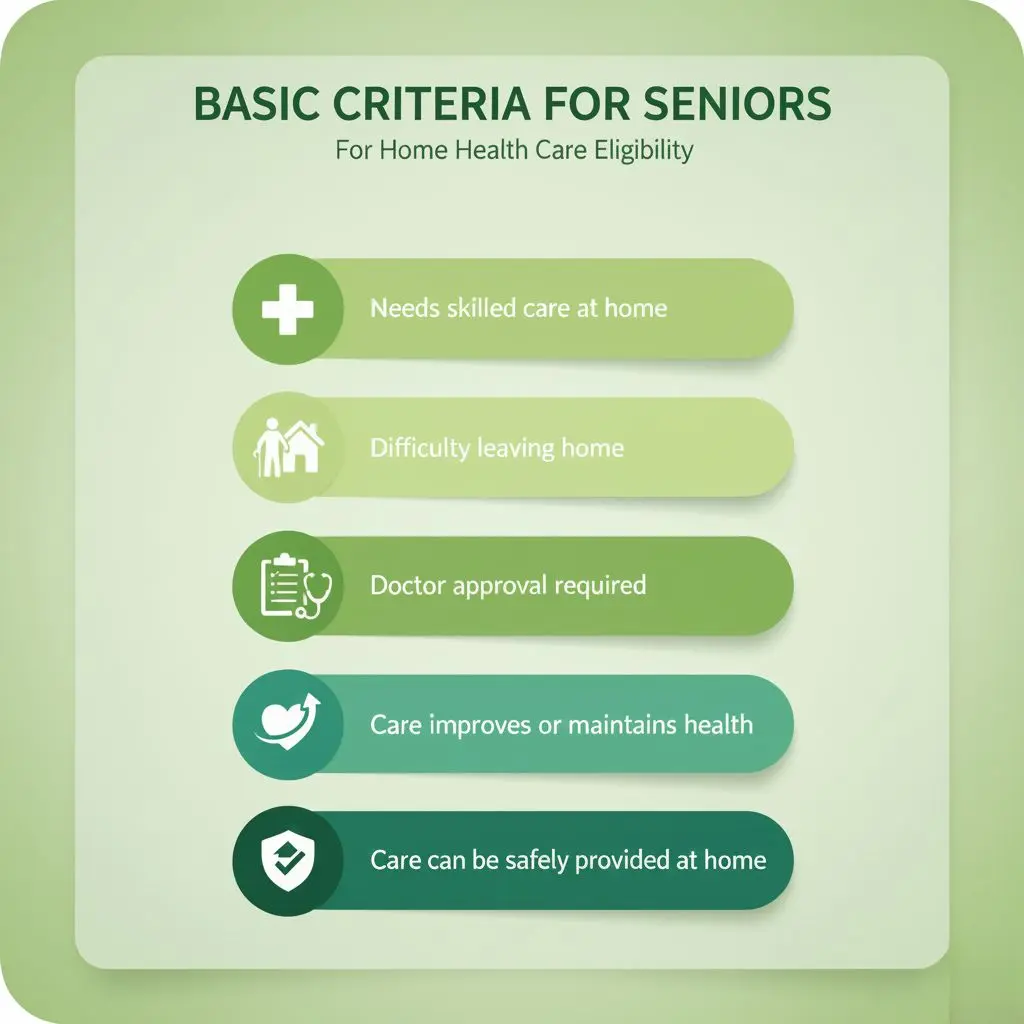
Basic criteria for seniors
While details vary, most seniors must meet several basic points:
- They have a health condition that needs skilled care at home.
- They have difficulty leaving home without help.
- A doctor has approved home health care services.
- The care is expected to improve their health or help them maintain current abilities.
- Care can be safely provided at home.
These points form the foundation of most eligibility decisions.
Medical Conditions That Make Seniors Eligible
Many families wonder whether a specific medical condition makes their loved one eligible for home health care. In reality, there is no exact list. Instead, home health care is usually granted when a condition requires skilled monitoring, treatment, or therapy.
Still, many common health problems often lead to eligibility. Here are simple explanations that can help families understand the process.
Heart conditions
Seniors who have heart disease, heart failure, recent heart surgery, or unstable blood pressure often qualify. They may need skilled nursing to monitor symptoms, manage medications, watch for swelling, teach diet care, and reduce the risk of hospitalization.
Stroke recovery
A senior recovering from a stroke may need several forms of skilled care. Physical therapy helps with balance. Occupational therapy helps with daily activities. Speech therapy helps with swallowing or communication. Stroke recovery is one of the most common reasons seniors receive home health care.
Diabetes complications
When diabetes leads to wounds, nerve problems, or unstable blood sugar, a nurse may need to visit regularly. These conditions are considered skilled needs and often qualify for home health care.
Breathing disorders
Chronic obstructive pulmonary disease, pneumonia recovery, or other breathing issues often require skilled monitoring. A respiratory-related issue may also require physical therapy to build strength or learn safe breathing techniques.
Mobility problems
If a senior develops difficulty walking, weakness after surgery, or increased falls, skilled therapy may be needed. These conditions can often qualify for home health care because the goal is to reduce risk and maintain independence.
Surgery recovery
Many seniors qualify for home health care after a surgery such as hip replacement, knee replacement, heart surgery, or abdominal surgery. Home therapy and nursing help speed recovery and reduce hospital readmissions.
Wound care needs
Seniors who have chronic wounds, surgical wounds, ulcers, or infections often qualify. Skilled nursing care is required to clean, monitor, and treat wounds safely.
Neurological conditions
Conditions like Parkinson’s disease, multiple sclerosis, or neuropathy can cause functional decline. When they create safety risks or difficulty performing daily tasks, home health care may be appropriate.
Chronic illness management
Seniors with long-term illnesses such as kidney disease, arthritis, or cancer often qualify when the condition requires skilled support or close monitoring to stay stable.
Sudden decline in health
A noticeable change in walking, memory, strength, or balance can trigger eligibility. When a senior suddenly struggles to care for themselves safely, skilled care may be needed.
Medical conditions play a major part in determining who qualifies for home health care services, but they are not the only factor. How the condition affects daily life and safety also matters.
Functional Needs and Daily Living Limitations
Functional needs refer to the tasks a person must perform to live safely each day. These tasks include dressing, bathing, eating, walking, and moving around the home. When a senior struggles with these tasks due to a medical condition, home health care may be needed.
When difficulty in daily tasks leads to eligibility
If a senior begins to have difficulty getting dressed, bathing, or preparing meals, it may point to a decline in physical strength or mobility. When this decline is connected to a medical condition, skilled care may be appropriate.
Insurance providers often look at whether these struggles are related to a clinical need. For example, if a senior cannot safely bathe because of poor balance caused by a stroke, a therapist may be needed to help them relearn safe movements.
Simple examples families can relate to:
- A senior who recently fell and now has trouble walking.
- A senior who cannot button clothing due to arthritis pain.
- A senior who becomes dizzy when standing after medication changes.
- A senior who loses strength after an infection or hospital stay.
- A senior who forgets how to perform basic tasks after a health event.
Functional needs help explain the real-life impact of a medical condition. When a senior cannot safely perform daily tasks because of a health problem, they may qualify for home health care.
Doctor’s Orders and Care Plans
A doctor plays a central role in deciding who qualifies for home health care services. Home health providers cannot begin skilled care unless a doctor approves it.
Why a doctor’s recommendation is important
A doctor reviews the senior’s medical condition, recent changes, and overall health. If the doctor believes the person needs skilled care at home, they write an order for home health services. This order is important because it:
- Confirms that the care is medically necessary.
- Helps the home health agency create a safe plan.
- Allows Medicare or insurance to approve services.
- Gives instructions to the nurses and therapists.
Without a doctor’s approval, home health care cannot start.
What a care plan includes
Once the doctor approves home health care, a care plan is created. It usually includes:
- The services the senior will receive.
- How often the nurse or therapist will visit.
- Specific goals that the care team will work toward.
- The medical actions needed, such as wound care or medication instructions.
- Safety steps for the home.
- The expected length of care.
A care plan helps everyone stay on the same page so the senior receives consistent care.
Medicare and Insurance Rules
Insurance coverage plays a major role in deciding eligibility. Medicare is one of the most common insurers for seniors, so understanding Medicare rules is important.
The good news is that Medicare tries to make home health care simple when a senior truly needs skilled care. Here is a clear breakdown that avoids confusing insurance terms.
How Medicare decides eligibility
Medicare usually checks for a few key points:
- The senior needs skilled nursing care or skilled therapy.
- A doctor has created a care plan.
- The senior is considered homebound.
- The services are expected to help the senior improve or stabilize.
- The care is safe to perform at home.
When these points are met, Medicare often covers the services.
What Medicare covers
Medicare may cover:
- Skilled nursing visits for medication management, wound care, injections, and health monitoring.
- Physical therapy to help with balance, strength, or walking.
- Occupational therapy to help with daily tasks.
- Speech therapy for swallowing or communication problems.
- Home health aide visits for personal care when skilled services are also being provided.
Medicare covers these services as long as they are needed and the senior continues to meet qualifications.
What Medicare does not cover
Medicare does not cover long term personal care or around-the-clock assistance. This includes:
- Regular housekeeping
- Full time supervision
- Meal delivery
- Companion care
- Long term home aides without skilled services
These services may be provided through private pay, Medicaid in some states, or community programs.
The simple explanation of homebound rule
Many families worry about the homebound rule. In simple terms, homebound means a senior has difficulty leaving home without help. They may still leave the house for special events or medical appointments, but they must need assistance or feel unsafe doing so alone.
Being homebound does not mean being trapped at home. It simply means that leaving the home is a challenge and is not done often.
Types of Services Seniors Can Receive If They Qualify
Once a senior qualifies for home health care, they may receive several types of skilled services. Here is a clear explanation of what each service means, written in simple words.
Skilled nursing
A skilled nurse is trained to provide medical care. Nurses can:
- Check vital signs
- Give injections
- Manage medications
- Clean and treat wounds
- Watch for symptoms
- Teach the senior and family how to manage conditions
- Help with new medical equipment
Nursing care helps prevent hospital visits and keeps the senior safe at home.
Physical therapy
Physical therapists help seniors improve strength, movement, and balance. They assist with walking, fall prevention, and exercises that help build confidence. PT is one of the most common services for seniors recovering from surgery or illness.
Occupational therapy
Occupational therapists focus on daily tasks. They help seniors relearn or adapt tasks such as getting dressed, bathing, cooking, or moving safely around the home. OT helps seniors stay independent.
Speech therapy
Speech therapists help with swallowing problems, speech issues, or memory-related communication changes. Many stroke survivors benefit from this service.
Home health aide support
Home health aides can help with personal care tasks such as:
- Bathing
- Dressing
- Grooming
- Light assistance with movement
Aides provide this support only when a senior is also receiving skilled services.
When Seniors Do Not Qualify
Not all seniors qualify for home health care. This can feel frustrating, but the rules are based on medical need and safety. Understanding why someone may not qualify can help families find alternatives.
Reasons a senior may not qualify
A senior may not qualify if:
- They do not need skilled nursing or therapy.
- They only need basic personal care without medical needs.
- They are not considered homebound under Medicare rules.
- A doctor does not sign off on home health care.
- They want long-term care instead of short-term skilled care.
- The care they need cannot be safely provided at home.
What families can do next
If a senior does not qualify, families still have many helpful options. They can look into:
- Private caregiving services
- Personal care agencies
- Medicaid long-term services
- Local senior support programs
- Adult day care centers
- In-home companion care
- Community meal or transportation services
Non skilled services focus on comfort, supervision, and daily help rather than medical care.
How Families Can Check Eligibility
Families often feel unsure about the first step. Thankfully, checking eligibility is easier than it seems. Here is a simple process:
Step by step guidance
Step 1: Contact the senior’s doctor.
Ask if the senior’s condition requires skilled care at home.
Step 2: Ask for a home health evaluation.
The doctor or home health agency can arrange an assessment.
Step 3: Gather information about the senior’s health.
Make note of recent changes, falls, medication problems, surgeries, or illnesses.
Step 4: Review whether the senior is homebound.
Think about how hard it is for them to leave the house.
Step 5: Call a Medicare-approved home health agency.
They can explain what is covered and schedule a nurse visit.
Step 6: Let the home health nurse complete an assessment.
The nurse will check medical needs, safety, and functional abilities.
Step 7: Wait for the doctor and agency to approve the care plan.
Once approved, services can begin.
Simple checklist
Here is an easy checklist families can use:
- Does the senior have a medical condition that needs skilled care
- Did a doctor recommend home health care
- Does the senior have trouble leaving home
- Does the senior need therapy or skilled nursing
- Have there been recent falls, hospital stays, or health changes
- Can care be safely given at home
If you can check most of these items, the senior may qualify.
Common Questions Families Ask
Families often have similar questions when trying to understand who qualifies for home health care services. Here are simple answers that clear up common confusion.
Does a senior have to be completely homebound
No. They can still leave home for special occasions or medical visits. The key point is that leaving home is difficult and requires assistance.
Can someone qualify if they only need help bathing
Not usually. Medicare requires skilled care. Bathing support alone is considered personal care, not skilled care.
Can home health care last for months
Yes, as long as skilled care is still needed and the doctor approves continued services.
Is home health care the same as personal caregiving
No. Home health care includes skilled medical services. Personal caregiving focuses on daily tasks and does not require a doctor.
Can a senior receive home health care after a hospital stay
Yes. Many seniors receive home health care after surgeries or hospital admissions.
What if the senior refuses care
A senior must agree to the services unless they lack the ability to make decisions. Participation is important for success.
Does Medicare cover full-time care
No. Medicare covers part-time skilled services, not full-time supervision. Can someone qualify for home health care if they have dementia They may qualify if dementia causes medical or functional issues that require skilled care. Not all dementia cases qualify.
What if the doctor will not sign the order
Without a doctor’s order, home health care cannot begin. Families may discuss concerns with the doctor or request a second opinion.
Can a family request home health care on their own
Families can request an evaluation, but a doctor must approve the services.
Conclusion
Home health care can be a valuable source of support for seniors who need medical help at home. Understanding the qualification rules helps families make confident decisions without feeling overwhelmed. While the process may seem confusing at first, the basic ideas are simple. A senior must need skilled care, have a doctor’s support, be considered homebound, and be safe to treat at home. Families looking to understand who qualifies for home health care services can use this guide to see whether their loved one may be eligible. If the senior does qualify, they may receive skilled nursing, therapy, and supportive care that can greatly improve safety and comfort at home. If they do not qualify, there are still many helpful options available through personal care agencies and community resources. Every senior deserves care that supports their well being. Exploring all available care options is an important step in helping your loved one stay healthy, safe, and comfortable in the place they call home.